Japanese Wellness Traditions You Should Know About
Matcha, wabi sabi, kintsugi, ikigai, hara hachi bu, ma, misogi, shinrin yoku... at first glance, these are very different concepts, one is about tea, another about broken ceramics, another about a reason for living. But they all share the same root: slowing down, accepting imperfection rather than fighting it, and paying attention to small things rather than to performance. It's this common thread that makes each of them a genuine wellness practice, not just a trendy Japanese word. Here's a real overview, with the actual origin of each tradition.
Matcha, more than a trendy drink
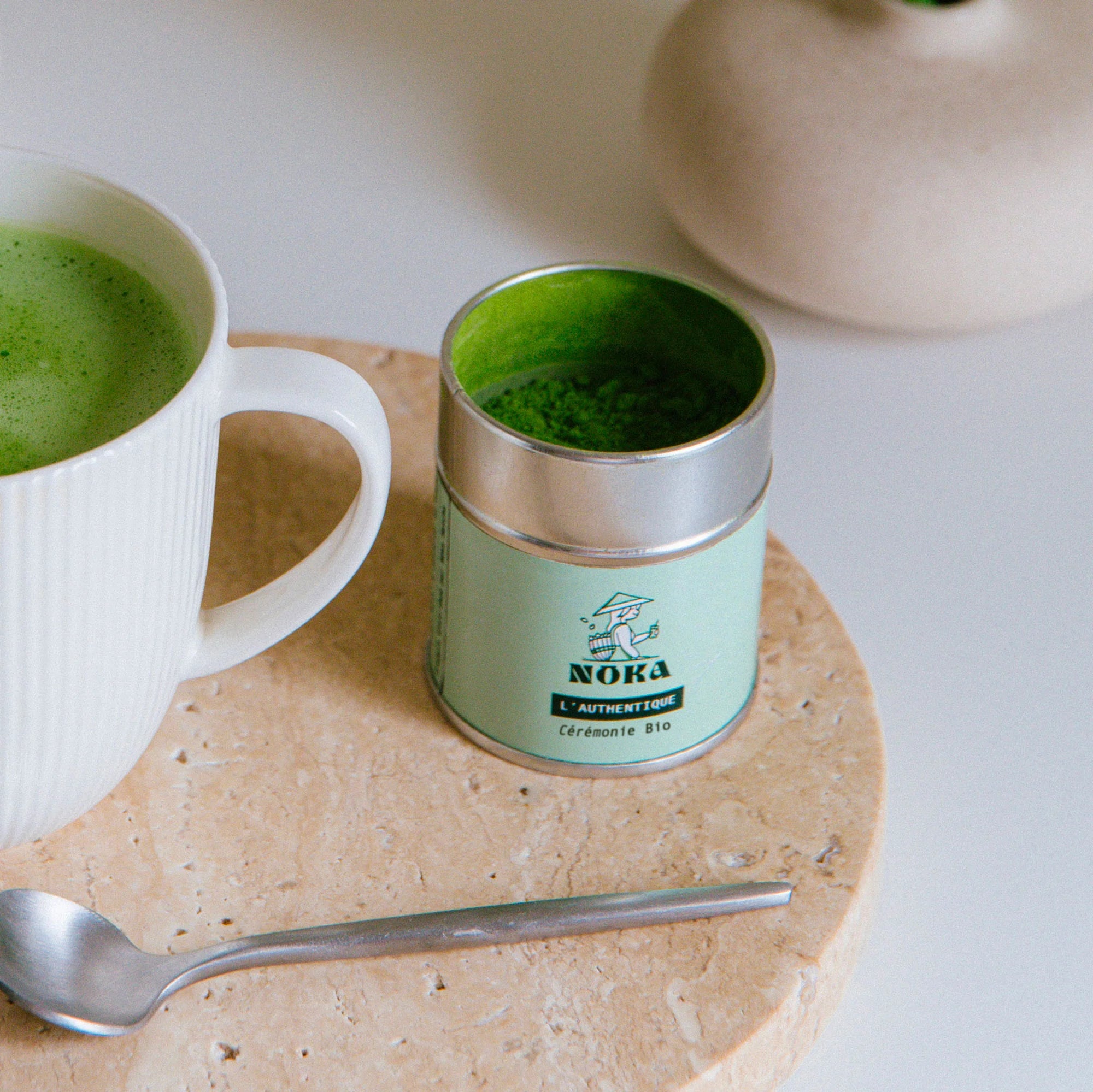
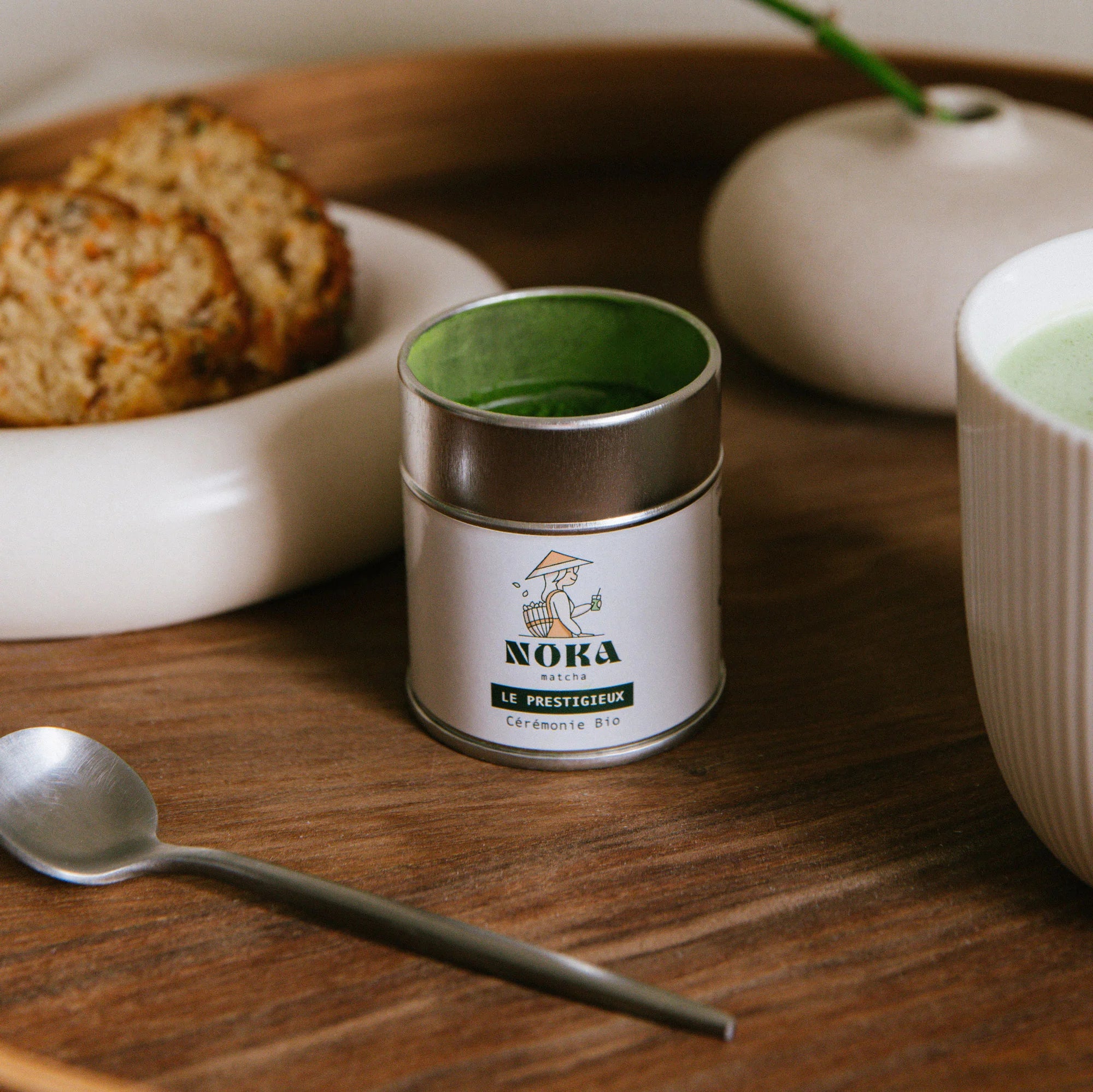
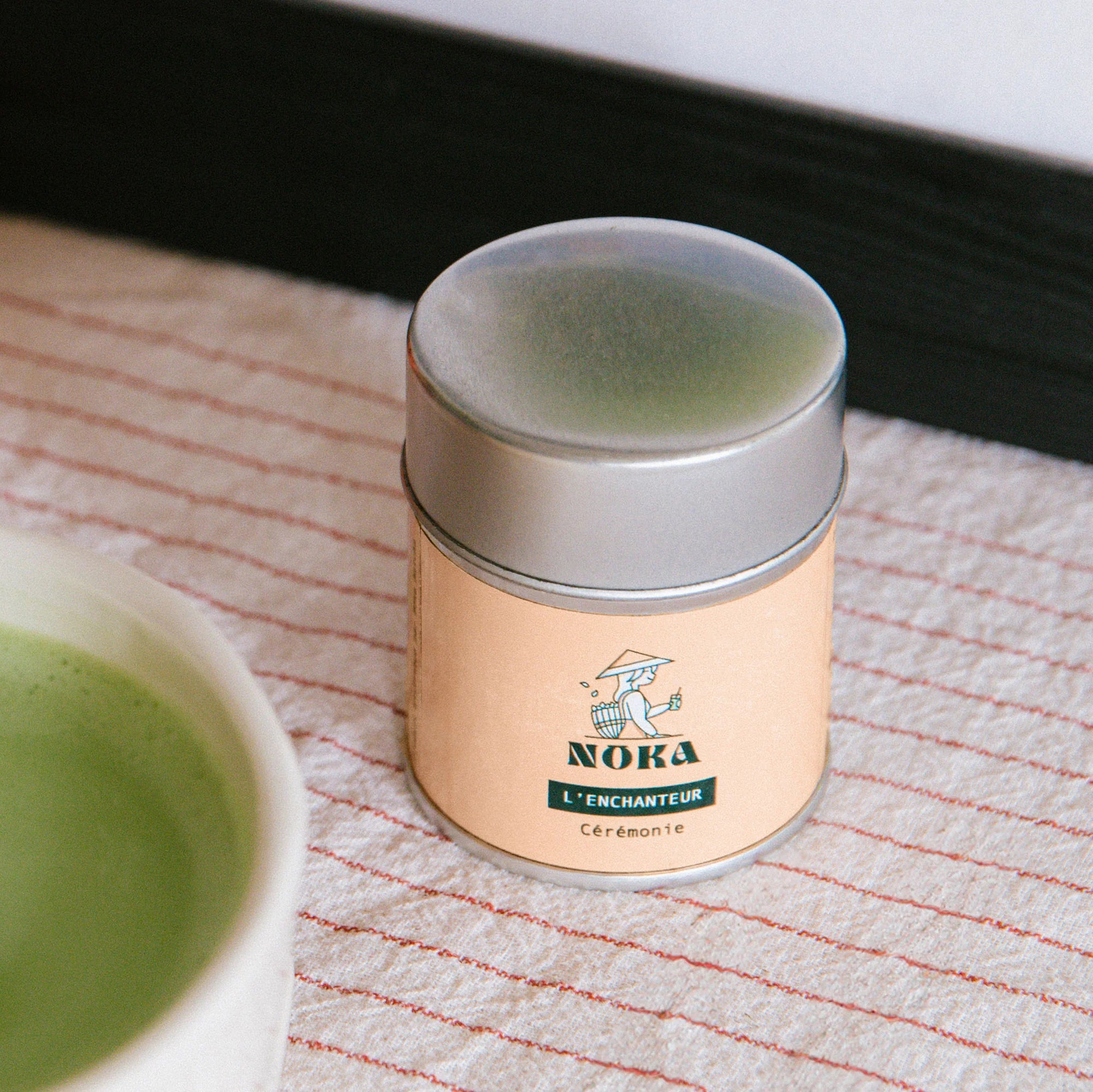
Matcha holds a special place on this list: it's not just a wellness concept, it's also what we sell, so we won't repeat ourselves here. What makes it a genuine wellness practice nonetheless is precisely the ritual around it: preparing matcha requires you to slow down, well before the very first sip. If you want to understand what it really brings to the body, or where it actually comes from, our articles on matcha's benefits for the body and on tencha, the leaf that becomes matcha cover all of that in depth.
Wabi sabi, beauty in imperfection
Wabi sabi is an aesthetic concept born from Zen Buddhist thought, combining two ideas: wabi, simplicity and restraint, and sabi, the patina that time leaves on objects. Together, they describe a philosophy that recognizes the beauty of imperfect, fleeting, and modest things, rather than seeking a smooth, standardized perfection.
It's a principle you find very concretely in the Japanese tea ceremony, where a slightly irregular bowl or a teapot weathered by the years are preferred over a new, perfect object. We cover this tradition in detail in our article on the tea ceremony and chanoyu. At home, wabi sabi translates simply: keeping a repaired object rather than replacing it, preferring handmade ceramics over something perfectly smooth, accepting that a piece of furniture will develop a patina over time rather than wanting it to stay new.
Kintsugi, repairing rather than hiding
Kintsugi is a Japanese technique that involves repairing broken ceramics with lacquer dusted with gold powder, rather than concealing the crack. It's said to have originated in the late 15th century, when a damaged bowl, sent to China for repair, came back to Japan patched up with unsightly metal staples: Japanese craftsmen then looked for a more elegant solution, and kintsugi was born.
Kintsugi fits directly into wabi sabi thinking: the crack isn't hidden, it's highlighted, it even becomes the most interesting part of the object. Beyond ceramics, it has also become a widely used metaphor for mental wellbeing when talking about resilience: the hardships we go through aren't flaws to hide, but a full part of who we've become.
Ikigai, a reason to get up in the morning
Ikigai is often translated as joy of living or reason for being. In Okinawa, where the concept is especially present, it simply refers to whatever gives someone a reason to get up in the morning, and is thought to be linked to the region's remarkable longevity. In the rest of Japan, it isn't really a formal theory, more an everyday expression, much more modest than what it's often credited with in the West.
A useful clarification, rarely found in articles on the subject: the famous four-circle diagram (what you love, what you're good at, what the world needs, what you can be paid for) that circulates everywhere online isn't an ancient Japanese invention, it's a Western addition, popularized well after the concept spread outside Japan. It can still be an interesting tool for reflection, but it isn't the original ikigai, which is simpler and more everyday than that diagram suggests.
Hara hachi bu, eating until eighty percent full
Hara hachi bu is a traditional Okinawan eating rule that involves stopping eating once you reach about eighty percent fullness, rather than waiting to feel completely full. It's an old habit, passed down from generation to generation, often cited as one explanation for the remarkable longevity observed on the island, the same one already mentioned in connection with ikigai.
In practice, it's mainly an invitation to eat mindfully: slow down, chew, pay attention to your body's signals rather than rushing ahead. A very concrete way of bringing, at mealtime, the same principle found throughout this list: paying attention to what you're doing, rather than doing it half-heartedly.
Ma, the art of emptiness and pause
Ma refers, in Japanese, to empty space or empty time, that gap we often tend to want to fill at all costs. In Japanese architecture or flower arranging, it's the space deliberately left bare around an object, which is precisely what gives that object its presence. In conversation, it's the silence you don't need to fill right away.
Applied to everyday life, ma invites you to leave gaps in your schedule, moments with no goal and no notifications, rather than wanting to fill every minute. It's probably the simplest tradition on this list to try: just this once, put nothing in its place.
Misogi, purification through cold water
Misogi is a Shinto purification ritual, traditionally practiced under a waterfall or in a river, to cleanse yourself both physically and symbolically. The idea is to start fresh, body and mind, after a difficult time or before an important undertaking.
This ancient ritual has inspired a more modern and accessible practice, voluntary cold exposure through a cold shower or ice bath, now popularized in Western wellness culture for its perceived effects on alertness and stress management, even though the scientific data on the real extent of these benefits still remains partial. In any case, it's best to ease into it gradually and listen to your body rather than forcing it.
Shinrin yoku, forest bathing
Shinrin yoku, literally forest bathing, refers to walking mindfully through a forest, taking the time to smell, observe, and breathe, rather than simply passing through the landscape. The concept was formalized in Japan in the 1980s, at the initiative of the Japanese forestry agency, as a full public health practice.
Its most commonly cited benefits relate to stress reduction and a feeling of calm after a walk in the forest, an effect that's widely documented but whose exact extent remains debated depending on the study. In any case, it's a simple practice to replicate, with no equipment or complicated method needed: just slow down, and truly be present to what surrounds you.
In summary
Matcha, wabi sabi, kintsugi, ikigai, hara hachi bu, ma, misogi, shinrin yoku: eight Japanese traditions very different in form, but all built on the same underlying idea, slowing down, accepting imperfection, and paying attention to small things rather than to performance. It's this common thread that makes them genuine wellness practices, not just trendy Japanese words. Understanding their true origin lets you draw inspiration from them more accurately, and often with more enjoyment too.
This overview is just a starting point: more in-depth articles on each of these traditions are coming soon to the blog.
Have a question about matcha and its traditions? Feel free to contact us, we'll be happy to answer.