Cortisol and Anxiety: A Daily Routine to Calm the Nervous System
Cortisol has a bad reputation, often wrongly summed up as simply a stress hormone to get rid of. The reality is more nuanced, and above all more actionable: a nervous system that regularly runs high can learn to return to calm, through a few concrete habits rather than a miracle solution. This isn't a medical article, if your anxiety is overwhelming or has lasted a long time, a healthcare professional remains the right person to talk to.
Cortisol, a useful hormone that sometimes runs high
Cortisol is a hormone secreted by the adrenal glands, essential for responding to a real danger or an urgent deadline, it mobilizes energy, increases alertness, and prepares the body to act. The problem isn't cortisol itself, but its repeated, prolonged release, when the body stays on alert even though no concrete danger is present. Over time, this state can weigh on sleep, digestion, mood, and the general feeling of fatigue, a cycle that in turn sustains the anxiety felt day to day.
The right approach, then, isn't to try to eliminate cortisol, but to regularly give your nervous system opportunities to return to a calmer state. This is where a simple, repeated routine often makes more of a difference than any single one-off action.
Meditation, even just a few minutes
You don't need an advanced practice to get a benefit from it, a few minutes a day are already enough to create a real break from everyday autopilot. The principle stays simple: sit down, close your eyes or fix your gaze on a point, and bring your attention to your breathing, letting thoughts pass without trying to hold onto them or push them away. Consistency matters more than duration, five minutes every day is often worth more than one long, occasional session.
Walking without distraction, an underrated tool
Walking with no phone, no podcast, no music, just paying attention to what's around you, helps release the pressure built up over the day. It isn't so much the physical activity itself that matters here, a slow walk works perfectly well, but the absence of any demand on your attention, which finally leaves room to breathe. If you're lucky enough to have a natural space nearby, our article on Japanese wellness traditions covers shinrin yoku, a more developed version of this same idea, practiced in a forest.
Presence, or stepping out of autopilot
Many days go by on autopilot, one task after another with no real presence in what you're doing. Coming back, even for just a few moments, to what you physically feel and to what's happening around you helps break that pattern. This can take the form of a genuine screen-free break, a meal eaten without distraction, or simply a moment where you allow yourself to do nothing. We cover a Japanese idea very close to this principle, ma, in that same article on wellness traditions.
Matcha's L-theanine, one tool among others
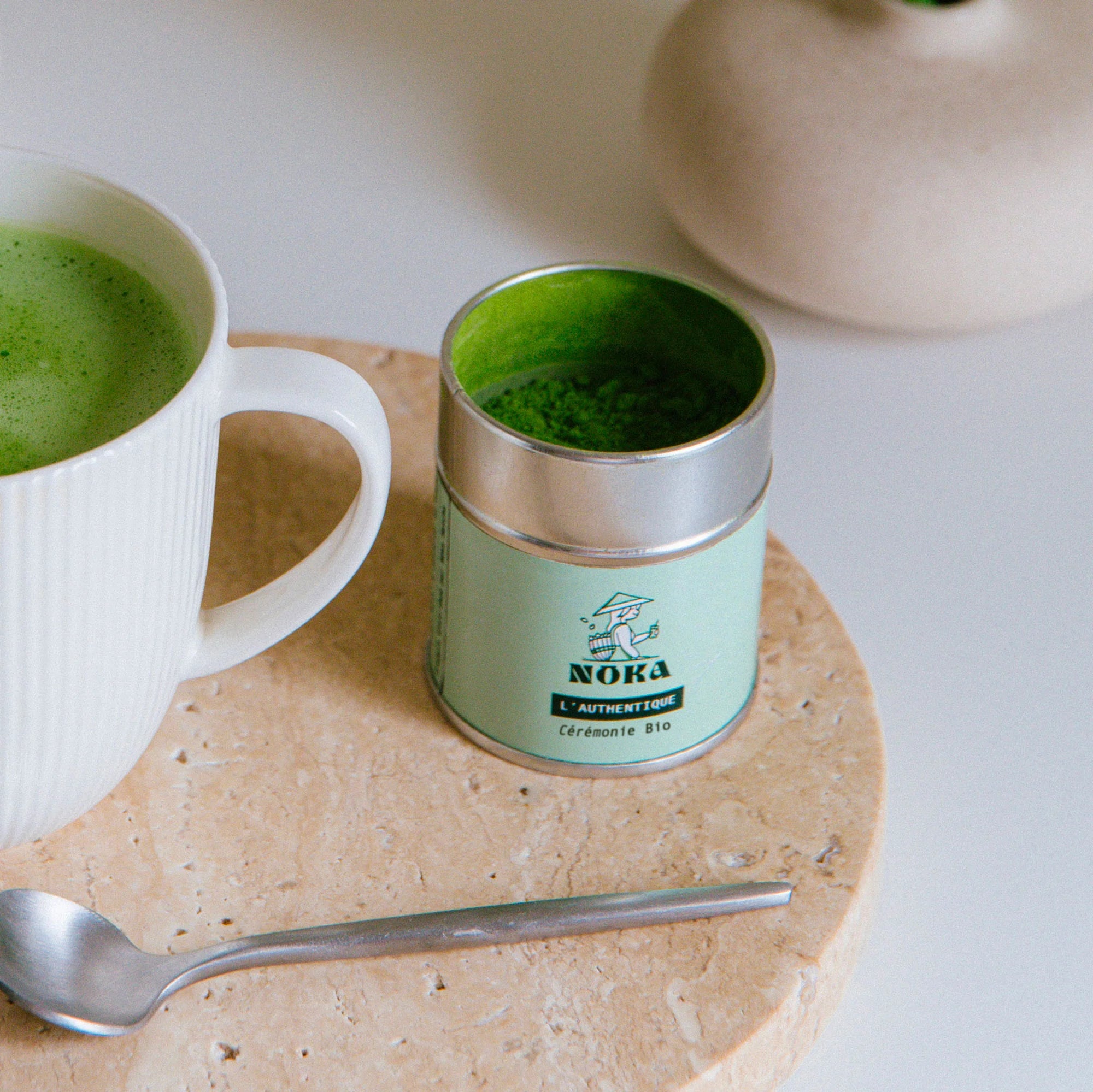
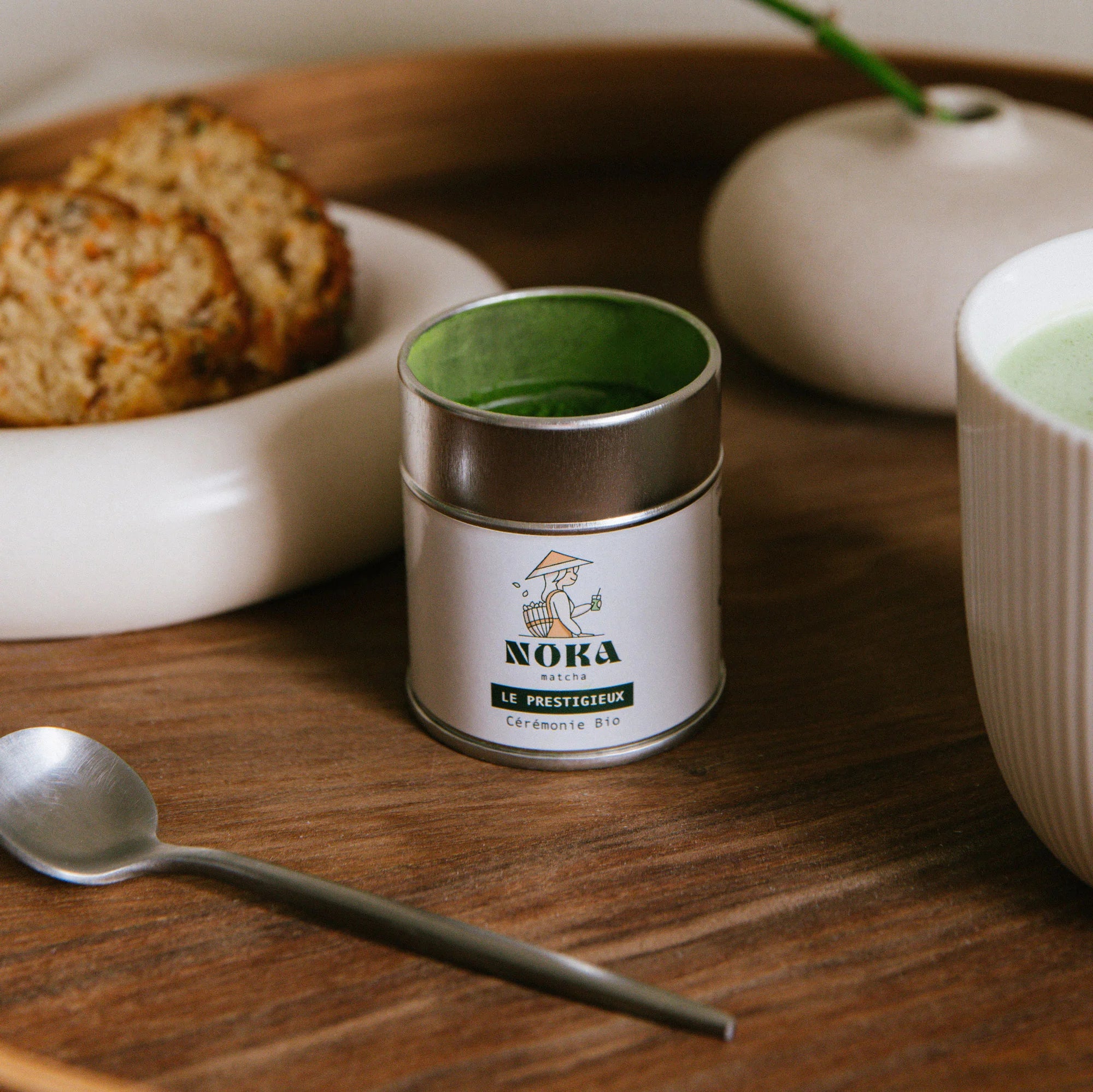
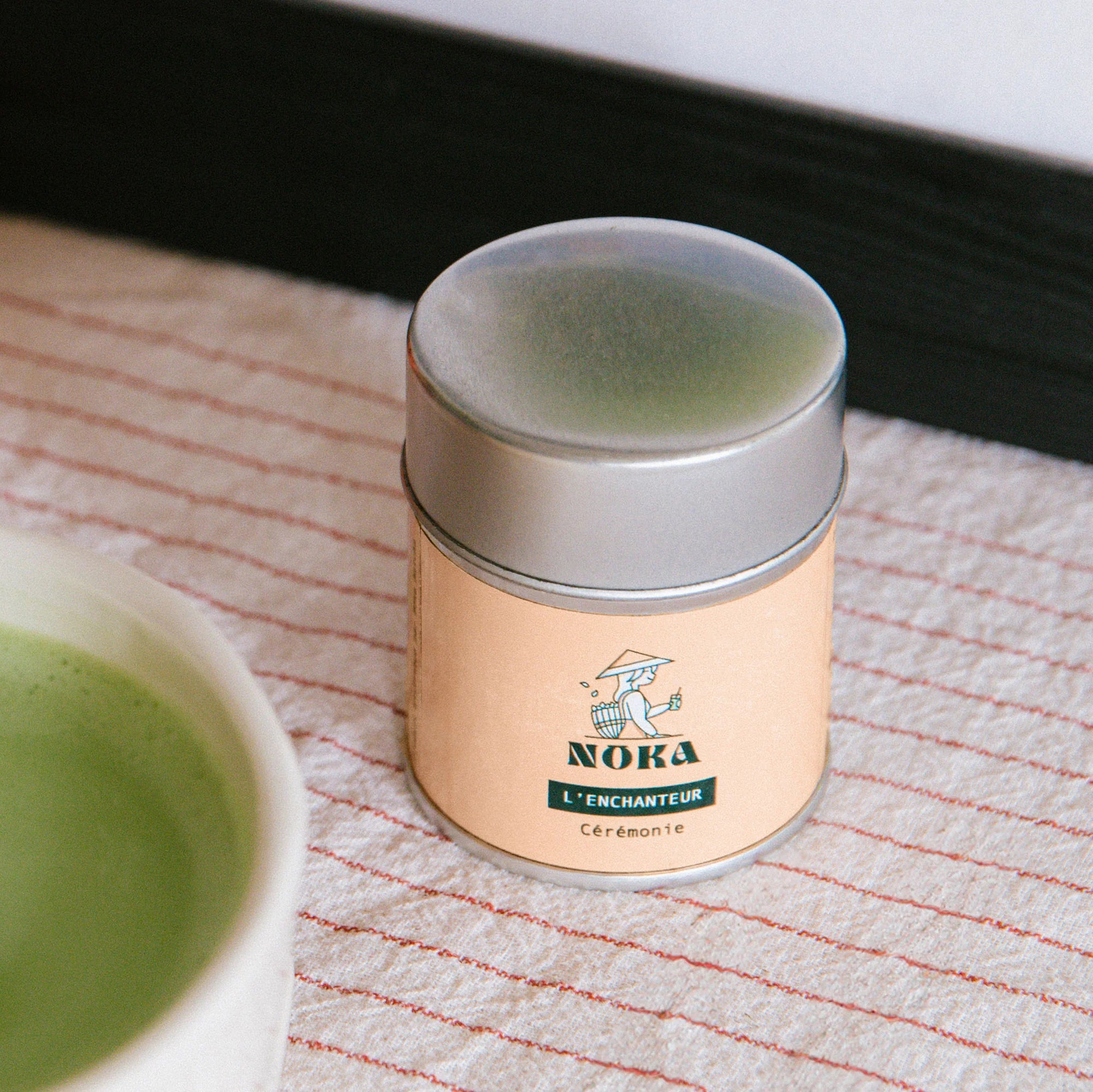
Matcha can fit into this routine, without being its cornerstone. It owes this reputation to its L-theanine, an amino acid that promotes a state of calm alertness, a mechanism we cover in our article on matcha's benefits for the body and in our article on matcha versus coffee. A study published in 2021 in the journal Neurology and Therapy actually showed that a dose of L-theanine lowered salivary cortisol after a stressful task, compared with a placebo. One caveat though: the dose tested (200mg, as a concentrated supplement) far exceeds the 20 to 40mg found in a classic bowl of matcha, so the effect is real, but more modest day to day than in a lab setting, and it in no way replaces the three habits above.
In summary
Cortisol isn't an enemy to eliminate, but a system that shouldn't be left running continuously. Short meditation, walking without distraction, and moments of genuine presence do most of the work, practiced regularly rather than all at once. Matcha can be added to this thanks to its L-theanine, but it remains a supporting tool, not a solution on its own, and never a substitute for professional advice if anxiety becomes too overwhelming.
Have a question about matcha and your everyday routine? Feel free to contact us, we'll be happy to answer.