Homemade matcha or coffee shop matcha: Which one is actually cheaper?
A matcha to go before jumping on the bus or starting the day, it's become second nature for a lot of people. Quick, on the way, no need to get the bowl and whisk out at home. But between the often uneven quality of what you find in coffee shops and the bill that quietly adds up over time, the question deserves an honest look: is it really the smart move?
Coffee shop matcha quality, often below expectations
Impossible to miss the phenomenon: in recent years, coffee shops have multiplied across most major French cities, and Paris is probably the city most caught up in the trend. Matcha holds a special place there, to the point that a category of venues has emerged built entirely around it, matcha bars, designed around this drink rather than as a simple add-on to a classic coffee menu. Polished storefronts, a photogenic matcha latte, a carefully styled atmosphere built for social media: this success owes a lot to the hype that's surrounded matcha in recent years, between an aesthetic recognizable at a glance and a ritual that's become almost a lifestyle statement. As a result, a coffee shop in Paris that doesn't offer a matcha latte is now the exception, and new spots dedicated entirely to it open almost every month. But this success has a downside: the quality of what's served doesn't always follow the same curve as demand.
In many places, the matcha served has a rather earthy color, a slightly powdery texture once mixed with milk, and a taste that recalls generic bitterness more than the round umami of a good, well-prepared matcha. This isn't an inevitable flaw of the latte format itself, it's mainly a sign of average-quality powder, chosen for its purchase price rather than its taste. We cover the tell-tale signs of a poor-quality matcha in our article on how to spot a bad matcha, and most of them apply just as well to what's behind the counter. Finding a genuinely good matcha at a coffee shop is still possible, but it's far from the norm.
Made to order or prepared in advance, a real difference
Another reality less visible to the customer: to keep up the pace, many places prepare their matcha in advance, sometimes in batches, kept in the fridge and simply mixed with milk when ordered. The trouble is that matcha oxidizes quickly once whisked with water or milk, losing its bright color and part of its taste within just a few hours. Japanese tradition, by contrast, calls for matcha to be made to order, whisked right before it's drunk, which is also what we recommend at home, as detailed in our article on how to drink your matcha. A batch prepared in the morning for the whole day simply can't, by nature, offer the same freshness as a bowl whisked on the spot.
That leaves the question of budget. Even with impeccable quality, making your own matcha has a reputation for being cheaper than buying it ready-made. Here's what that really looks like, with the numbers to back it up.
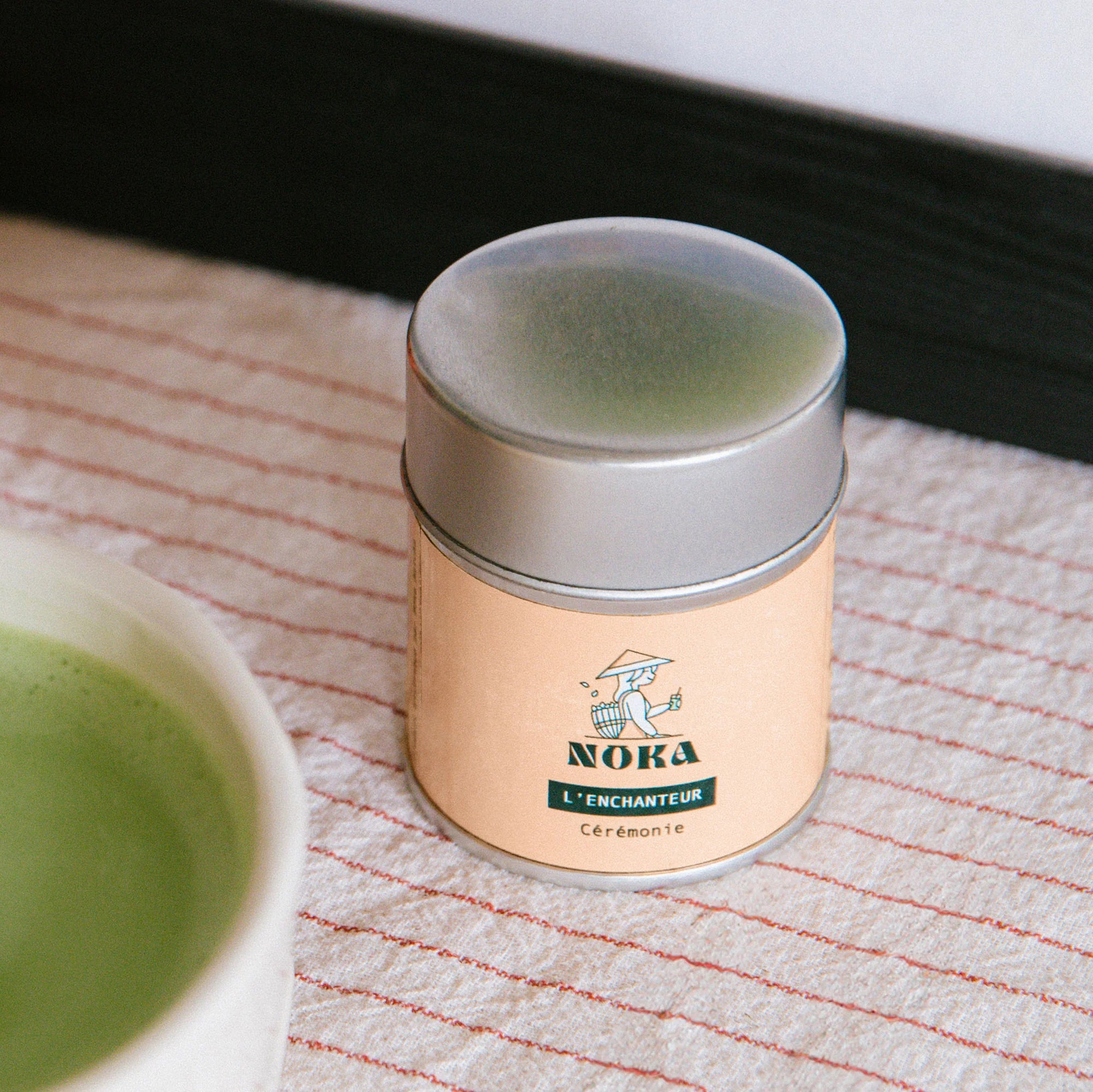
The gap widens fast. Even with Le Prestigieux, our top-of-the-range matcha, a year of homemade matcha costs roughly three times less than a year of matcha to go, and the gap exceeds €8,000 over 5 years. With L'Enchanteur, our most accessible matcha, that gap climbs to nearly €9,000 over the same period. At that scale, it's clearly a different kind of budget.
Put together, it becomes very concrete. Over a single year, the gap exceeds €1,600, almost enough to cover the cost of a driving license (€1,804 on average in France). Over 5 years, the gap exceeds €8,000, and at that scale, the list of what that represents is a little dizzying:
- a Cartier Love bracelet, the classic model (€8,150 on cartier.com)
- an iconic Chanel bag, like the maxi flap bag (€7,600 on chanel.com)
- 650 dirty martinis at a Parisian bar (expect between €9 and €16 a cocktail depending on the venue)
- 5 city trips across Europe for two, flights and hotel included
- an adorable little puppy, with plenty left over to cover its kibble for the first few years
- several months' rent for a studio outside Paris
- a top-of-the-range laptop, with room to spare for accessories
Hard to put it more plainly: this isn't a minor line item on a receipt, it's a real budget, one that shifts into a different category depending on what you choose to do with it.
In summary
Between often middling quality, a preparation method that strays from the traditional made-to-order approach, and a budget that climbs fast over time, matcha to go from a coffee shop loses out on nearly every front against matcha made at home. The process takes a few extra minutes, but it comes out well ahead, both for taste and for your wallet.
Have a question about our matchas or the best way to equip yourself? Feel free to contact us, we'll be happy to answer.