How to Store Matcha Properly: The Definitive Guide
A good matcha is something you choose, but it's also something you need to store properly. Improperly stored, even the best matcha loses its color, its umami, and its freshness within a few weeks. There's a lot of conflicting advice circulating on the subject, especially about the refrigerator. Here's what we recommend, along with the reasoning behind each piece of advice.
Matcha's four enemies
Matcha is a whole tea leaf ground into a very fine powder. This powder has far more surface area in contact with air than a whole leaf does, which makes it much more sensitive to four factors:
- Air, which oxidizes chlorophyll and catechins, shifting the color from bright green to a dull green, then brown.
- Light, particularly UV, which speeds up this same degradation.
- Heat, which speeds up all chemical reactions, including the ones that damage taste and color.
- Humidity, which causes the powder to clump and can encourage mold if it lingers over time.
Every storage rule that follows stems from these four factors.
The cupboard: a simple but limited solution
A cool, dark cupboard away from any heat source remains the simplest method for everyday use: no container to pull out of the fridge, no special precautions when opening it. For a supply consumed quickly, within a few weeks, this is more than enough.
The limit of this method comes down to one word: stability. A cupboard follows your home's ambient temperature, and that varies far more over the course of a year than you'd think. During a heatwave, the temperature inside a kitchen cupboard can easily climb above 28-30°C (82-86°F) for several days in a row, especially in a poorly insulated home without air conditioning. And the hotter it gets, the faster the oxidation reactions that damage matcha's color and taste speed up, and this effect isn't linear: a few days of intense heat can, within weeks, undo what a cool environment would have preserved for months.
So the cupboard remains a good option for a supply consumed quickly, in a home that stays cool all year round. As soon as the question extends to several months, or to hot periods, a cooler solution becomes clearly more reliable.
Cold, your best ally
This is exactly where the refrigerator becomes worthwhile. Contrary to what you sometimes read, it's a good place to store matcha, as long as you do it right. The reason is simple: the lower the temperature, the slower the chemical reactions behind oxidation, and above all, it stays stable all year round, heatwaves included. It's the same principle that makes food last longer in the fridge than at room temperature.
At Nōka, we recommend the refrigerator, and we follow our own advice: some of our sealed batches keep for more than two years under these conditions, with no noticeable loss of color or taste. An opened matcha stored in the refrigerator keeps its qualities for up to 3 to 4 months, compared to just a few weeks at room temperature.
The right method, to avoid condensation
The reservation you often hear against the refrigerator has to do with condensation: when you take a cold container out into a warmer, more humid kitchen, moisture can form and dampen the powder. It's a real risk, but an easy one to manage, and it doesn't justify avoiding the cold altogether:
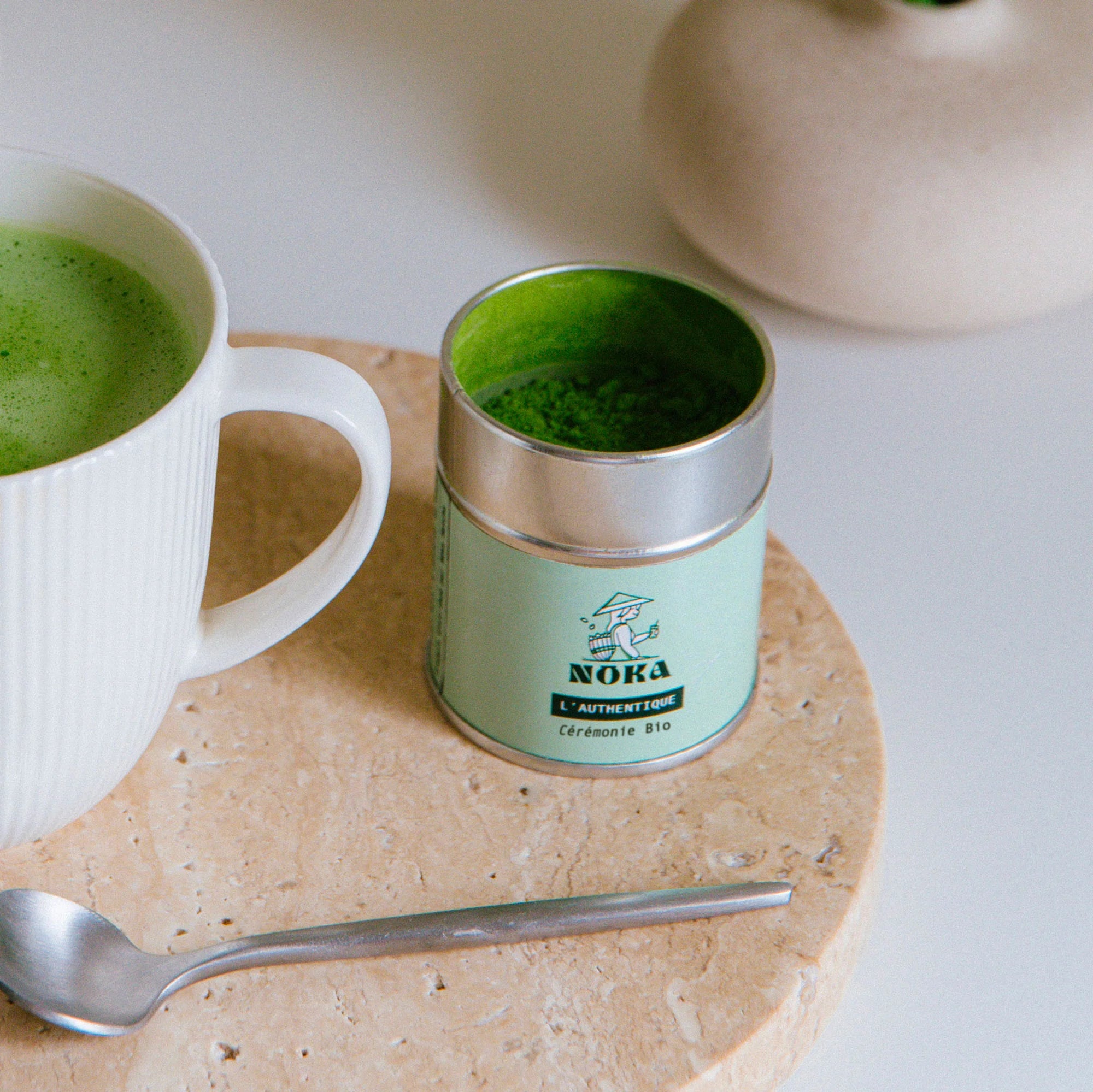
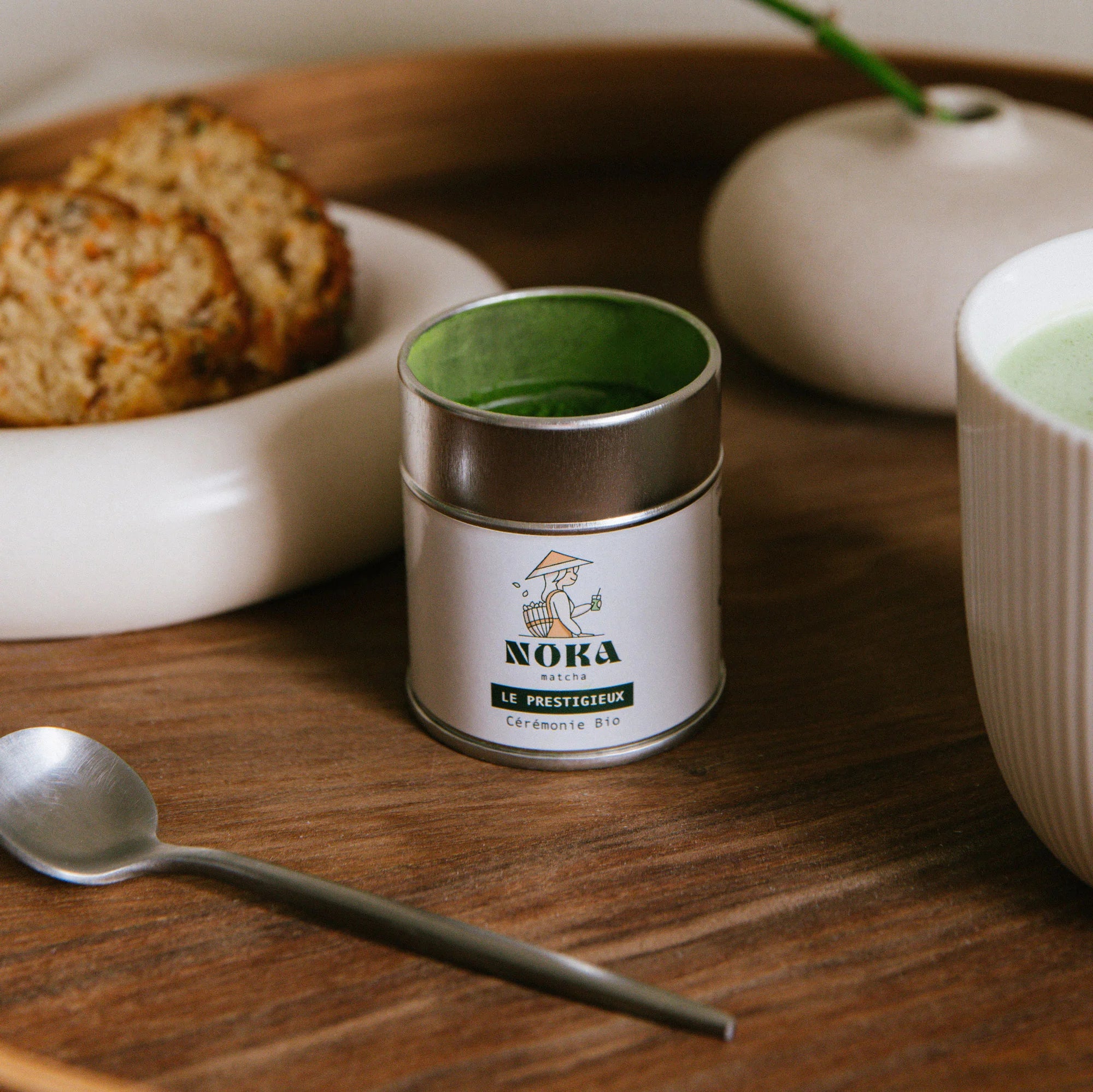
- Store matcha in an airtight, opaque container, closed immediately after each use.
- Avoid repeatedly moving it back and forth between the fridge and the room: take the container out, scoop your dose, close it, and put it right back in the fridge.
- If your kitchen is very humid, leave the closed container at room temperature for a few minutes before opening it, to reduce the temperature gap at the moment you open it.
- Use a small, dry spoon every time you scoop, never a damp one.
With these few habits, condensation is never an issue.
Our other habits for storing matcha well
- An airtight container above all: it's the single most important factor, far more than the location you choose.
- An opaque container, or one stored away from light, to limit UV exposure.
- Away from any heat source (oven, stovetop, sunny window).
- Away from strong odors (coffee, spices): matcha, being very porous, easily absorbs surrounding smells.
- Transfer a small amount into an everyday jar, so you open the main bag as rarely as possible.
In summary
Air, light, heat, and humidity are matcha's four enemies. The refrigerator slows their effect and significantly extends your matcha's shelf life, provided you use an airtight container and limit the back-and-forth between cold storage and room-temperature air. It's this combination, not the location alone, that makes the difference between a matcha that turns dull within weeks and one that keeps all its vibrancy for months, or even years for a bag that stays sealed.
Any questions about storing your matcha? Feel free to contact us, we'll be happy to answer.