Umami: What Is It, and Why Is Matcha So Rich in It?
On our product pages, you'll notice one word coming up again and again in each matcha's description: umami. It's a precise word, with a real scientific definition, and it's also the key to understanding why some of our matchas taste so distinctive. We break it all down here, and we're also taking the opportunity to talk about the flavor notes specific to each of our matchas.
Umami, a flavor in its own right
Sweet, salty, sour, and bitter are the four basic flavors everyone knows. Umami is the fifth, scientifically identified in 1908 by Kikunae Ikeda, a professor at the Imperial University of Tokyo. While studying kombu seaweed broth, he isolated glutamate, a molecule responsible for a distinct, rounded, savory taste sensation that none of the four existing flavors really described. Since then, science has confirmed that our taste buds have receptors specific to umami, just as they do for sweet or salty.
Glutamate isn't the only one responsible: inosinate and guanylate contribute to it too. Umami occurs naturally in ripe tomatoes, dried mushrooms, parmesan, soy sauce, as well as seaweed and green tea.
Why matcha contains so much of it
In tea, umami mainly comes from an amino acid called theanine, found in the leaf. The more a tea leaf is shielded from the sun before harvest, the more theanine it concentrates: that's the whole principle behind the shading practiced before matcha's harvest, which we cover in our article on matcha origin and cultivar. Less light, less astringency, and far more umami: this is what sets a ceremonial-grade matcha apart from a classic green tea grown in full sun.
This is also why umami intensity varies from one of our matchas to another: it depends on the cultivar, the origin, and the harvest — not simply on the fact that it's matcha.
How we describe umami on our product pages
Each product page displays a flavor profile with several criteria: aroma, body, umami, astringency, brightness, complexity, bitterness, sweetness, and freshness. Most are fairly intuitive, but here's a rundown anyway:
The flavor notes specific to each of our matchas
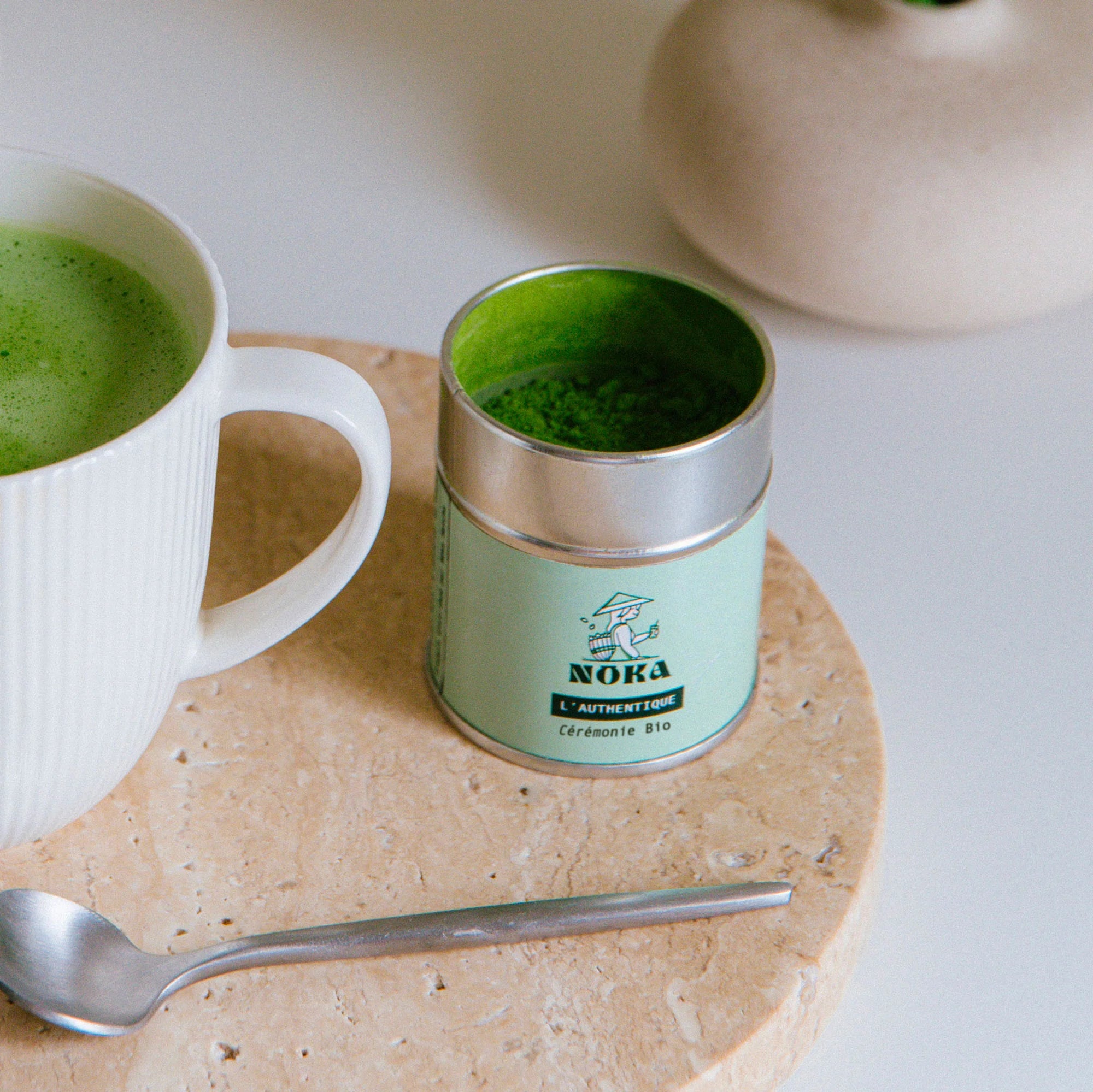
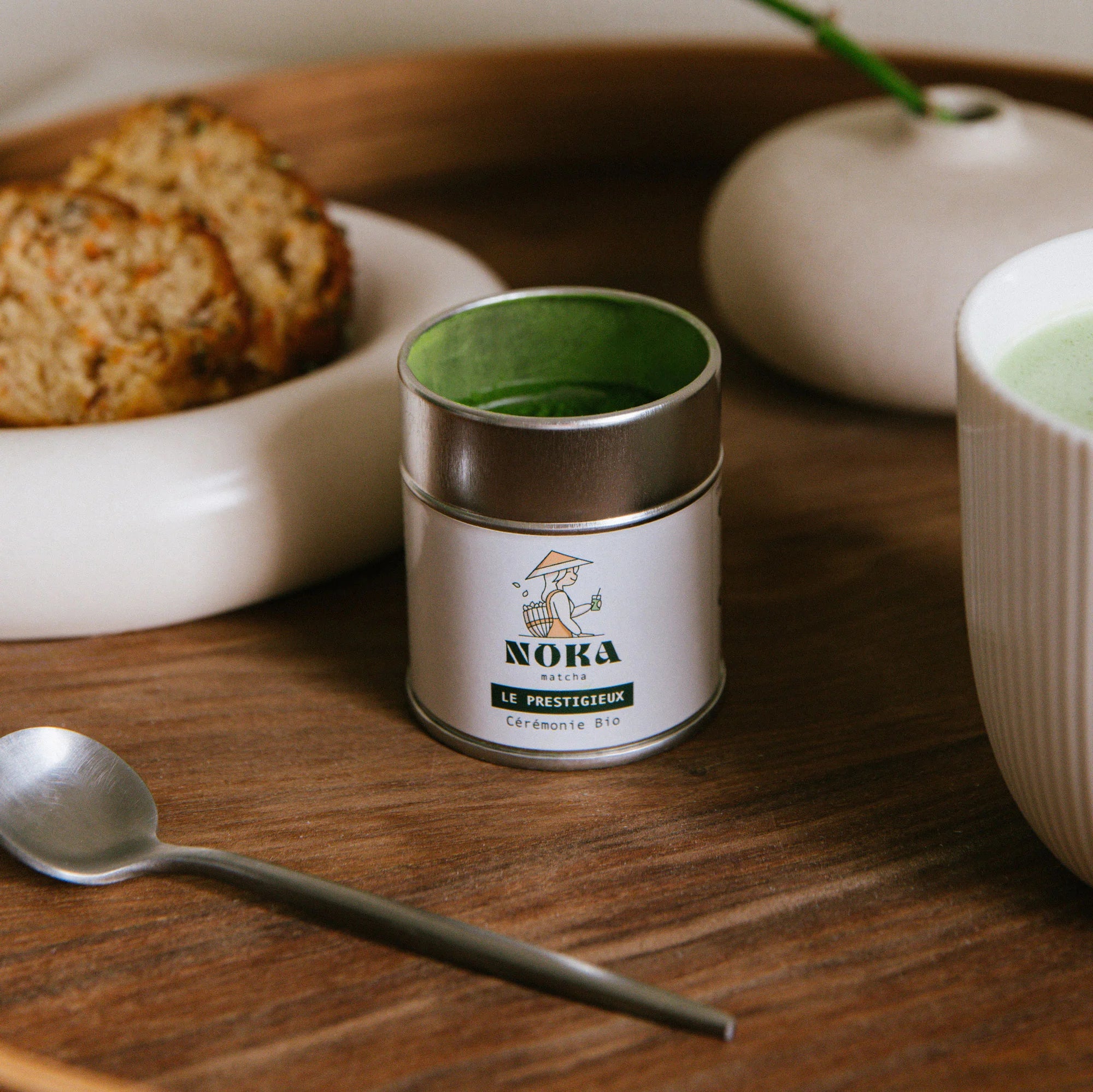
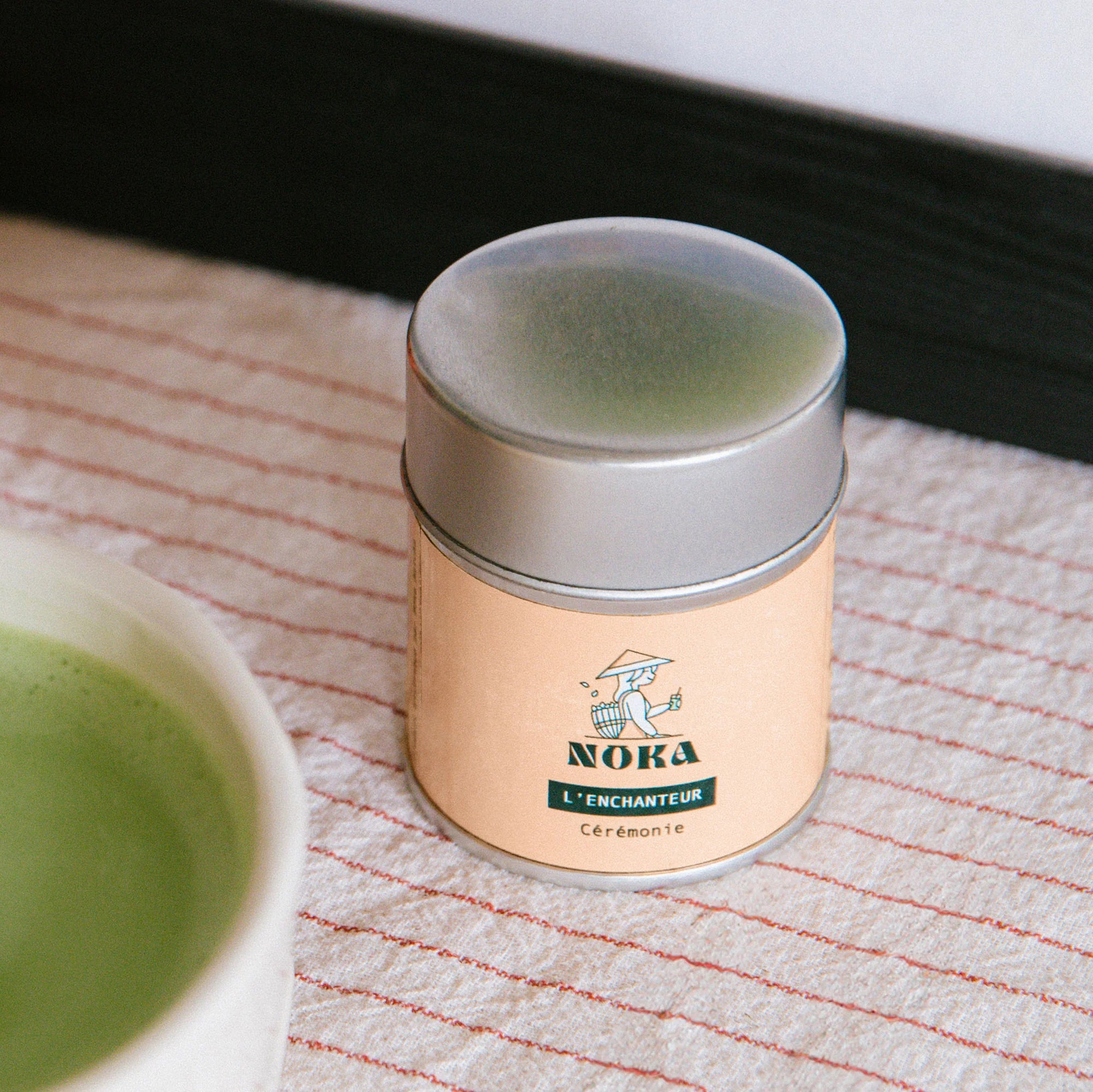
On our product pages, each matcha is also described with more specific notes: macadamia nut for Le Prestigieux, hazelnut and cocoa for L'Authentique, poppy for L'Enchanteur. These aren't added ingredients — there's nothing but tea in our matchas: they're tasting references, exactly the way a wine is described with notes of red berries or a coffee with notes of caramel.
These notes come directly from the cultivar, the origin, and the harvest. A well-shaded matcha rich in umami tends toward round, creamy notes, like hazelnut or macadamia. A matcha with more grassy freshness leans more toward cut grass or flowers, like poppy. It's this combination that makes each product in our range recognizable, beyond the simple word "matcha."
In summary
Umami is the fifth basic flavor, scientifically identified in 1908 thanks to glutamate. Matcha is naturally rich in it because the tea plants are shaded before harvest, which concentrates theanine in the leaf. Its intensity varies according to cultivar and origin, which also explains the notes specific to each of our matchas, from hazelnut and macadamia to poppy flower: tasting references, not added ingredients.
Any questions about the taste of our matchas? Feel free to contact us, we'll be happy to answer.