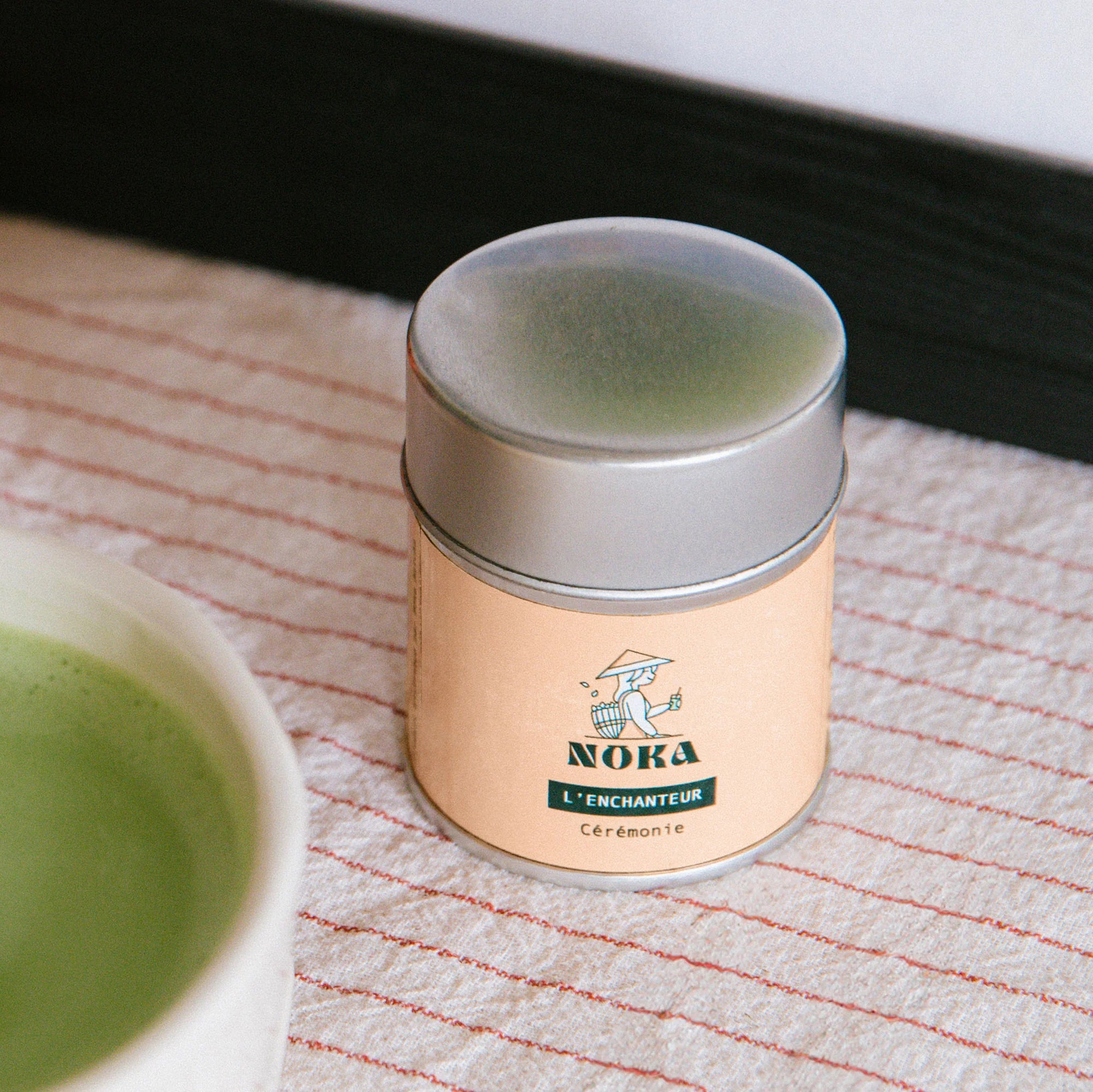
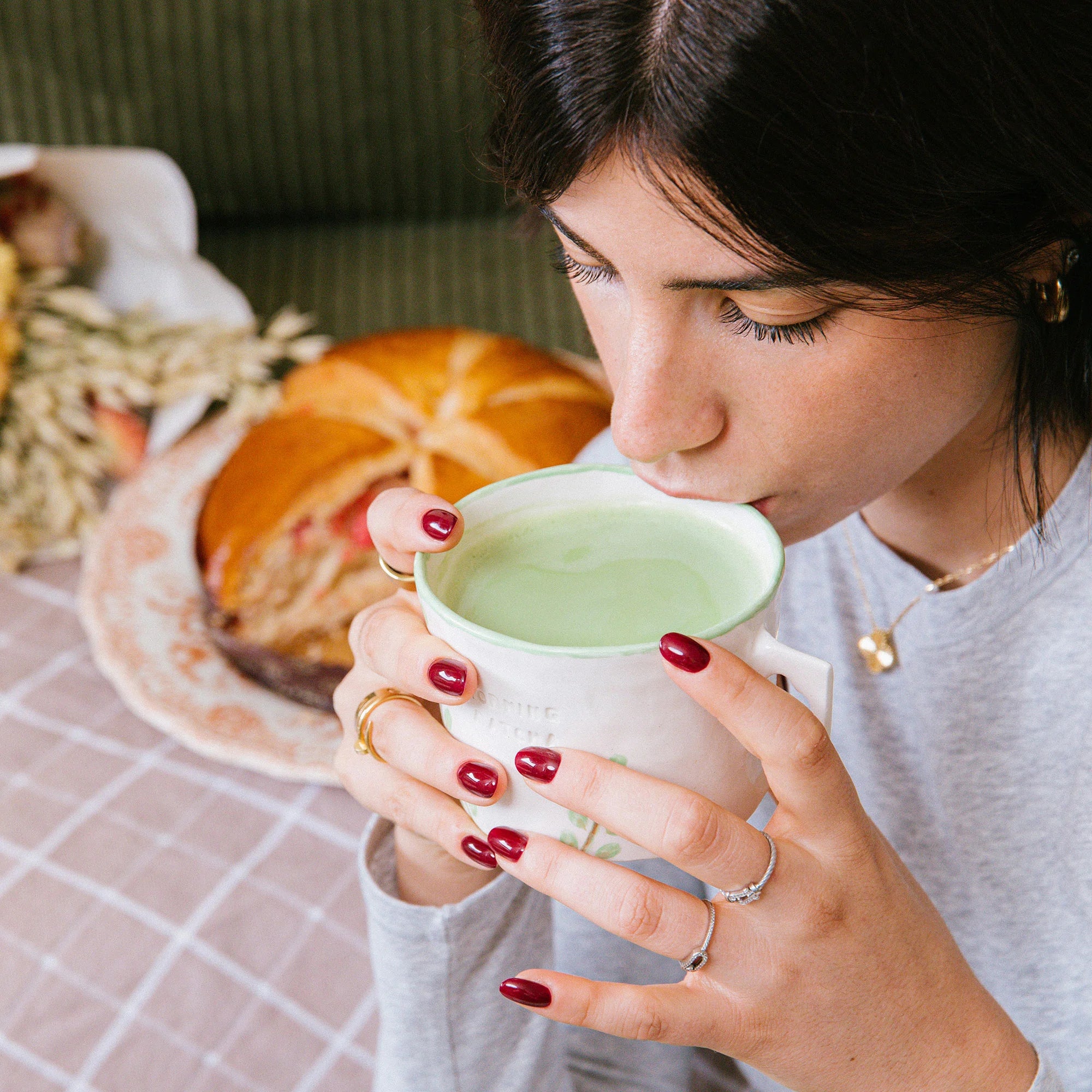
Can you drink matcha every day?
"I drink matcha every day — is that a good idea or not really?" It's a question we get asked often, and it deserves a real answer rather than a simple reassuring yes. Here's what you need to know to fit matcha into your daily routine with peace of mind: caffeine dose, time of day, and the few cases where it's worth easing off.
Matcha, a drink made for everyday life
Unlike a concentrated extract or a dietary supplement, matcha is a powder made from green tea leaves, consumed as is, mixed into hot water or milk. This simplicity naturally makes it a drink that fits easily into a daily routine, much like a morning tea or coffee.
That leaves one central question for everyday consumption: caffeine.
How many cups of matcha per day?
Matcha contains caffeine, like any tea made from the tea plant (Camellia sinensis). Lab analyses of ceremonial-grade matcha put its content at around 30 mg of caffeine per gram of powder, or roughly 30 to 60 mg for a 1 to 2 g cup.
What is well established, however, is that the European Food Safety Authority (EFSA) considers a caffeine intake of up to 400 mg per day to pose no particular risk for a healthy adult, across all sources combined (coffee, tea, chocolate, sodas...). For reference, an espresso provides about 63 mg of caffeine and a cup of filter coffee about 96 mg: so, for an equivalent amount, matcha remains less concentrated in caffeine than coffee.
With one or two cups of matcha a day, most adults therefore stay well below this threshold, even accounting for other caffeine sources throughout the day. The point to watch, as with any caffeinated drink, is the total: matcha in the morning, coffee at lunch, tea in the afternoon... it's the sum that matters, not any single drink. It's also this same L-theanine, present in the same leaf alongside the caffeine, that explains why matcha's energy is often described as more gradual and sustained over time than coffee's.
And what about heavy metals, with daily consumption?
It's a legitimate question, especially given how much it's being talked about right now: does consuming a powder every day change the picture on heavy metals? We had our entire range tested by an independent accredited laboratory (Eurofins Lanagram) for exactly this reason. You can see the detailed results, serving by serving, in our dedicated article.
Without repeating every figure here, the levels measured at Noka stay noticeably lower than what's typically found on the market for this type of product, even factoring in daily consumption accumulated over several weeks. It's a point we'd rather document with full lab reports than ask you to simply take our word for it.
In which cases is it better to moderate your intake?
As with any caffeine-containing drink, a few situations call for extra caution:
- Pregnancy and breastfeeding: European recommendations suggest limiting total caffeine intake to around 200 mg per day, across all sources. This is a point to discuss with a healthcare professional rather than a blog post.
- Caffeine sensitivity: palpitations, jitteriness, or sleep disturbances are signals worth listening to, regardless of which drink causes them.
- Children: caffeine isn't recommended below a certain age; it's best to reserve matcha for adults, or use it in very small amounts in recipes.
- Late in the day: since caffeine stays active in the body for several hours, a cup of matcha in the late afternoon can delay falling asleep for sensitive people.
Getting the dose right for everyday matcha
A few practical guidelines for everyday consumption:
- A typical dose is around 1 to 2 g of powder per cup, roughly one teaspoon.
- Morning or early afternoon remains the best time, to enjoy the energy boost without disrupting sleep.
- As with any drink, variety is a good idea: alternating with water, other teas, or herbal infusions keeps you from relying on a single source for all your caffeine intake.
FAQ
In summary
Drinking matcha every day isn't excessive at all: with its moderate caffeine content, one or two cups a day stay well within recommended guidelines for an adult. The main thing to watch is the caffeine total across all your drinks, along with a few specific situations (pregnancy, caffeine sensitivity, young children). To learn more about its composition and benefits, head over to our dedicated page on matcha's benefits.
Any questions about your daily matcha consumption? Contact us, we'll be happy to answer.