Matcha: Origin and Cultivar, What's the Difference?
Uji, Yabukita, Okumidori, Saemidori... On matcha packaging, these Japanese words often pile up with no explanation at all, as if they were interchangeable. They're not: some refer to a growing region, others to a specific tea plant variety. Two completely different categories of information, which most brands happily blur together.
Here's what these terms actually mean, how many there are, and where our own matchas fit on this map.
Origin or cultivar? Two terms confused on almost every package
When a brand writes "Uji matcha" or "Yabukita cultivar," it's actually talking about two completely unrelated things:
- Origin is the geographic region where the tea was grown: Uji (Kyoto prefecture), Nishio (Aichi), Shizuoka, or Kagoshima, Yame, and Nagasaki on the island of Kyushu. It's a piece of information about place.
- The cultivar (品種, hinshu in Japanese) is the specific variety of tea plant (Camellia sinensis) that was planted, somewhat like a grape variety for wine. Yabukita, Okumidori, and Saemidori are cultivars, not places. The same cultivar can be planted in several regions, and the same region can grow several cultivars.
This distinction isn't a technical detail reserved for specialists: it changes what a label actually tells you about the tea you're drinking. An origin speaks to terroir and history; a cultivar speaks to genetics and taste. Both are useful, but neither replaces the other.
Uji, the historic birthplace of matcha (but no longer its only center today)
Uji is a town in Kyoto prefecture, south of the former imperial capital. It was here, between the 15th and 16th centuries, that the shade-growing method known as ōishita saibai was developed: tea plants are covered with straw, reeds, or matting before harvest, which limits photosynthesis and concentrates the amino acids responsible for umami. This technique is directly responsible for tencha, the dried leaf that, once ground, becomes matcha.
Historically, Uji is also the birthplace of the three great Japanese teas that come out of this same region: matcha, sencha (invented in 1738 by an Uji producer, Nagatani Sōen, to make quality tea more accessible without going through shading) and gyokuro. This is what explains the almost mythical reputation the name "Uji" carries on a tea package.
But today, Uji represents only a small part of Japan's tea production. Most of the tencha and matcha consumed around the world now comes from other regions, particularly Kyushu (Kagoshima, Fukuoka/Yame, Nagasaki), which accounts for a large share of current production. Seeing "Uji" on a label is therefore neither an automatic quality guarantee, nor a requirement for good matcha: it's a piece of origin information, to be read as such, not as a certification label.
The cultivar, the tea plant's real genetic ID card
A cultivar is a tea plant variety that has been selected, tested, and then officially registered in Japan, most often for its resistance, yield, color, or flavor qualities. This selection work has a long history and is still ongoing.
According to an academic review published in 2024 in the reference work Natural Products in Beverages (Springer Nature), 130 cultivars and breeding materials have been officially registered in Japan to date, the vast majority intended for green tea. Of this total, the breakdown by use is: 67 cultivars for sencha, 11 for gyokuro, 8 for tencha (matcha's raw material), and 8 for kamairicha. Registered cultivars now cover 95.2% of Japan's tea-growing area, with the remainder still made up of plants grown from unselected seedlings (zairaishu).
Another useful detail from the same study: many of the cultivars used for gyokuro and tencha were individually selected from plants originating in Uji. So the region and the cultivars are historically linked, even though they refer to different things.
Yabukita, the cultivar that took over Japan
If a single word had to sum up the modern Japanese tea plant, it would be this one. The cultivar Yabukita was selected in the early 20th century by a producer from Shizuoka prefecture, Sugiyama Hikosaburō. It was then spread on a scale no other cultivar has matched since: according to the same 2024 study, it now accounts for 67.6% of Japan's total tea-growing area, compared to roughly 80% based on older estimates from 2012, which suggests a gradual diversification of planted cultivars in recent years.
Yabukita is first and foremost the reference cultivar for sencha, but its availability and consistency have, in practice, also made it a widely used cultivar for tencha and matcha, without being a "specialized" cultivar for shade-grown teas the way Okumidori or Saemidori are.
Okumidori and Saemidori, cultivars designed for shade
Conversely, some cultivars have been specifically selected for the shade-grown cultivation of gyokuro and tencha. According to the Japanese trade association's (JGTA) green tea labeling standards, as cited by Wikipedia, gyokuro is frequently produced from cultivars such as Asahi, Okumidori, Yamakai, and Saemidori, while sencha remains largely sourced from Yabukita.
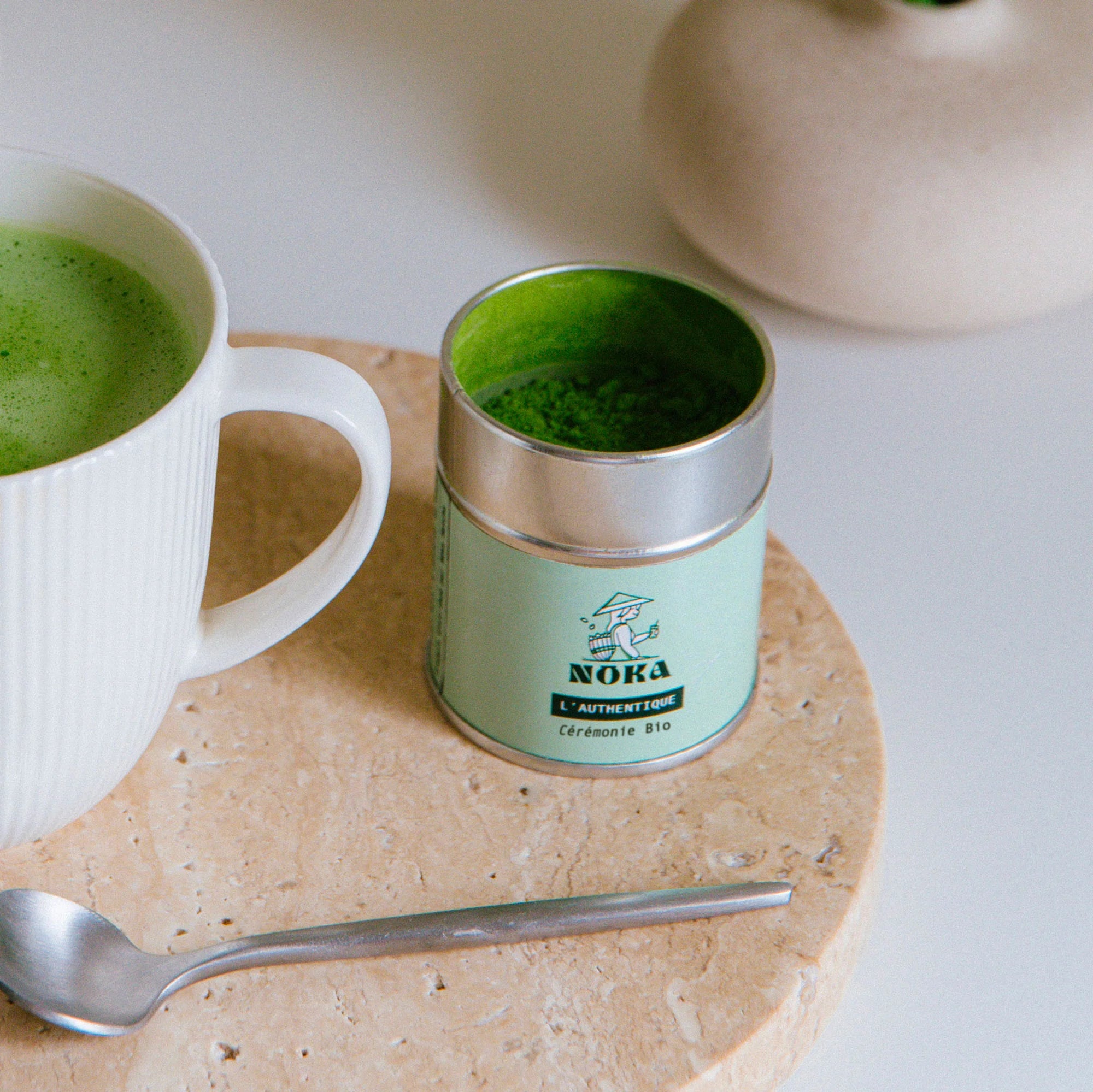
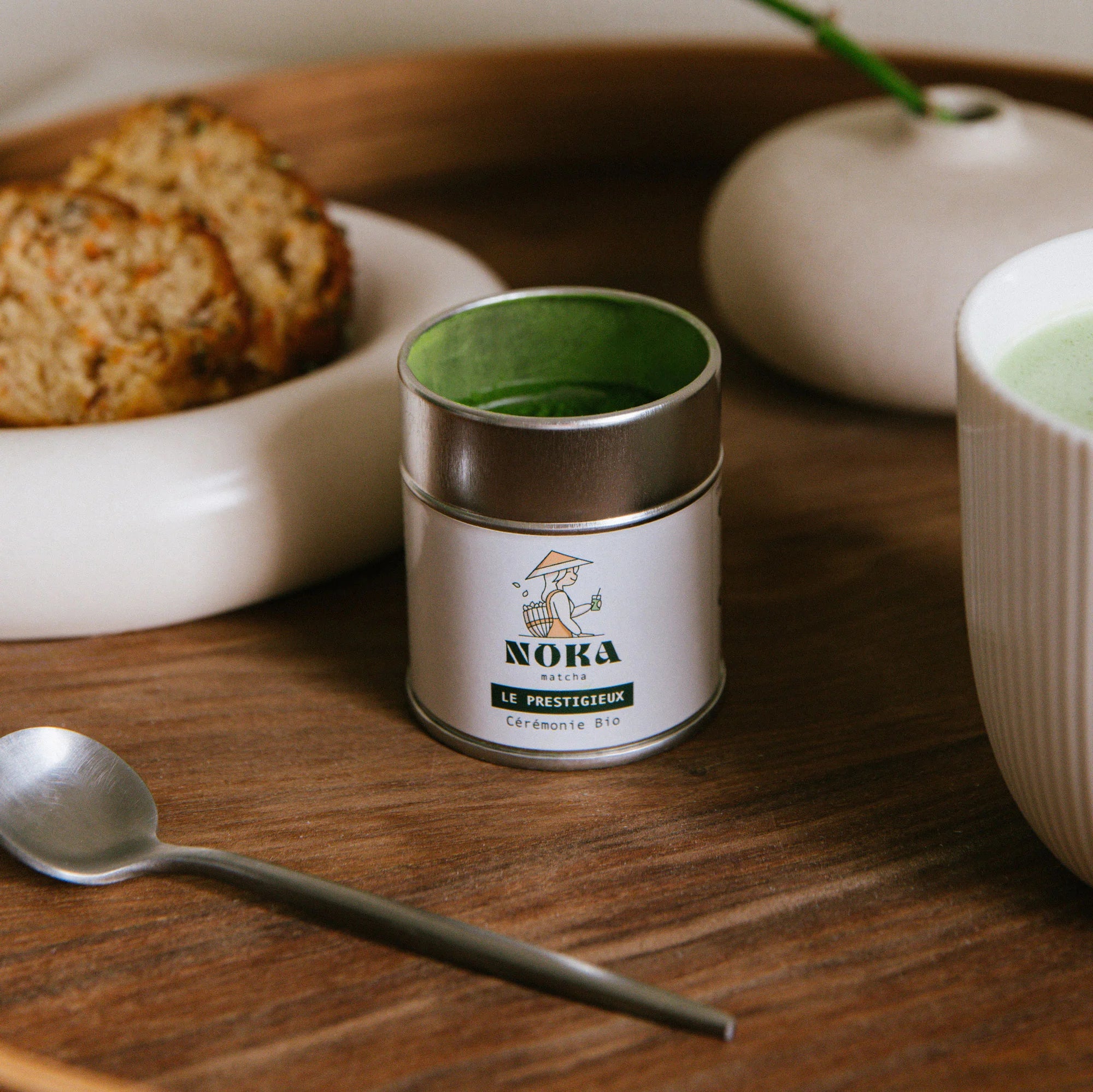
Okumidori (奥みどり) and Saemidori (さえみどり) are among these cultivars associated with shade cultivation, and therefore with the tencha/matcha supply chain. This is notably the case in our own Le Prestigieux and L'Authentique matchas, detailed further below.
Beyond these specific names, there are many other cultivars registered specifically for tencha or gyokuro (8 and 11 in total according to the study cited above), though most remain poorly documented outside Japan, which explains why Western brands' communications are often limited to just a handful of names.
And where do Noka's matchas fit into this?
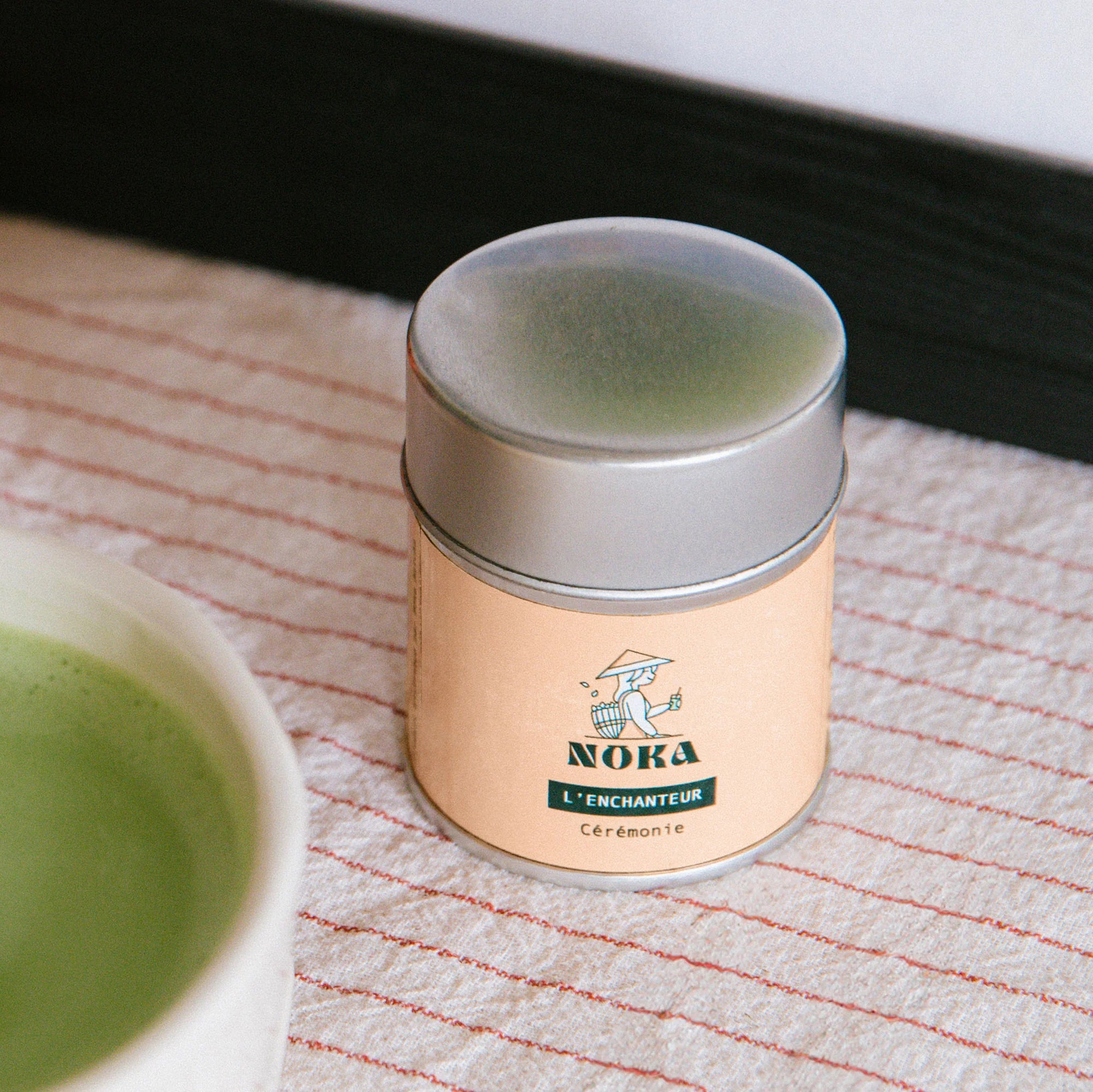
In the interest of transparency, here is the exact origin and cultivar for each of our 4 matchas: none comes from Uji, all come from Kyushu, one of Japan's major tea-producing islands, which today accounts for a significant share of national production.
How to read a matcha label, in practice
A few pointers for decoding what a matcha package actually says:
- A region name (Uji, Nishio, Kagoshima, Yame, Shizuoka...) tells you where the tea was grown, not its quality as such: quality mainly depends on the grower's expertise, freshness, and harvest grade.
- A cultivar name (Yabukita, Okumidori, Saemidori...) tells you which tea plant variety was planted, a real clue to the flavor profile, but one that's best read with experience, not as a universal quality score.
- The complete absence of both pieces of information on a label isn't necessarily a problem, but it makes it impossible to verify anything: this is where the producer's transparency makes the difference.
FAQ
In summary
Uji is a region, not a cultivar. Yabukita, Okumidori, and Saemidori are cultivars, not regions. Japan now has 130 officially registered tea plant cultivars, only a handful of which are specifically designed for tencha and gyokuro, with Yabukita remaining by far the most widespread. Our 4 matchas don't come from Uji: they're grown in Kyushu, using cultivars we consistently list on every product page, rather than hiding behind a region name with a ready-made reputation.
Any questions about the origin or cultivar of one of our matchas? Contact us, we'll be happy to answer.