How to Drink Matcha: Shot, Latte, Iced, Koicha.The Complete Guide
Shot or latte, there's more than one way to drink matcha. Between the traditional version drunk plain, hot or iced lattes, smoothies, and culinary uses, each format changes the texture, the intensity, and even, in part, what you actually absorb.
Here's a complete tour of the ways to prepare matcha, with the actual recipe for each (dose, water, temperature), plus a detailed answer to the question we get asked the most: does milk really kill matcha's benefits?
Drinking matcha plain, with nothing added
This is the preparation closest to Japanese tradition. It comes in two distinct versions, which most Western brands lump together under a single word: the shot.
The shot, or rather usucha
What cafés and Western brands now call a "shot" corresponds, in Japanese tradition, to usucha (薄茶), literally "thin tea." It's the everyday preparation of the tea ceremony, the one found in nearly all matcha drunk day to day.
According to the classic guidelines of the tea ceremony, usucha is prepared with about 2 g of powder for 60 ml of water heated to around 90°C (194°F), whisked vigorously with a bamboo whisk (chasen) until a fine foam forms on the surface. This foam isn't decorative: it noticeably softens the matcha's astringency.
It's the simplest format to prepare at home, the most concentrated in flavor, and the one that lets matcha express itself with no filter at all.
Koicha, the version almost no one offers
Much less known outside Japan, koicha (濃茶), "thick tea," is the most demanding and oldest preparation in the tea ceremony. It uses twice as much powder for half as much water as usucha: about 4 g of matcha for just 30 ml of water, heated to a lower temperature, around 80°C (176°F). Unlike usucha, koicha isn't whisked to create foam: it's mixed slowly, which gives it a thick, almost syrupy texture and a much more direct matcha flavor.
This preparation requires very high-quality matcha: at this concentration, the slightest flaw in the tea (bitterness, excessive astringency) becomes immediately noticeable. This is why koicha has traditionally been reserved for top-tier matchas, and why it's rarely offered outside circles of connoisseurs.
Despite its texture close to syrup or liquid cream, koicha is drunk, in small sips straight from the bowl (chawan); it's never eaten with a spoon. Traditionally, it's even shared from a single bowl passed around among guests, each person taking a sip in turn, which is why its texture has to stay perfectly smooth and lump-free.
Drinking matcha with milk or a plant-based liquid
This is the most widespread way of drinking matcha in the world today, largely popularized by major coffee chains.
The hot latte
The matcha latte was born in Western cafés, an adaptation of Japanese tea to the café latte format. It really took off when Starbucks launched its matcha latte in 2006, followed by Dunkin' in 2020, two milestones that did a lot to introduce the drink to the general public.
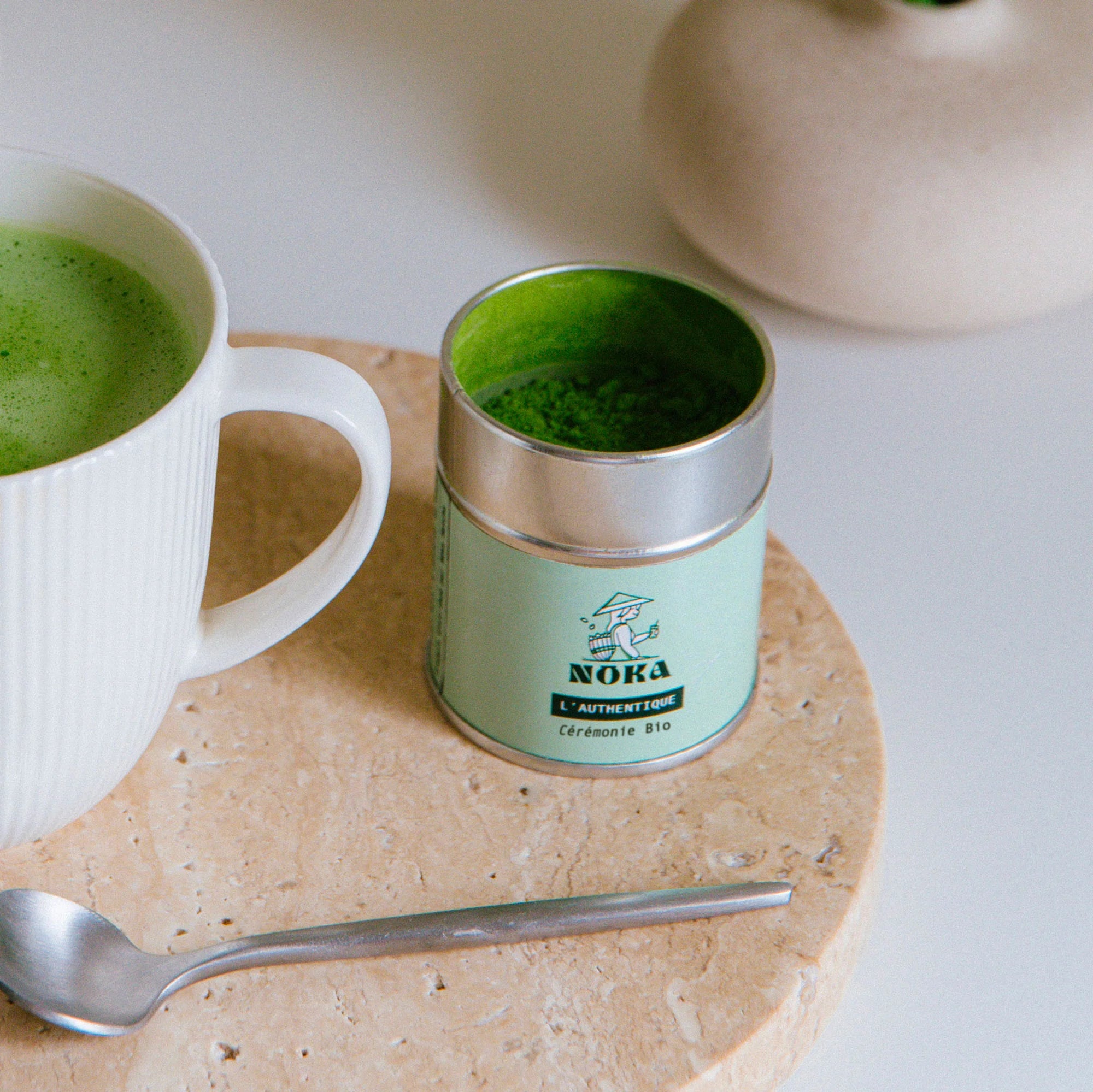
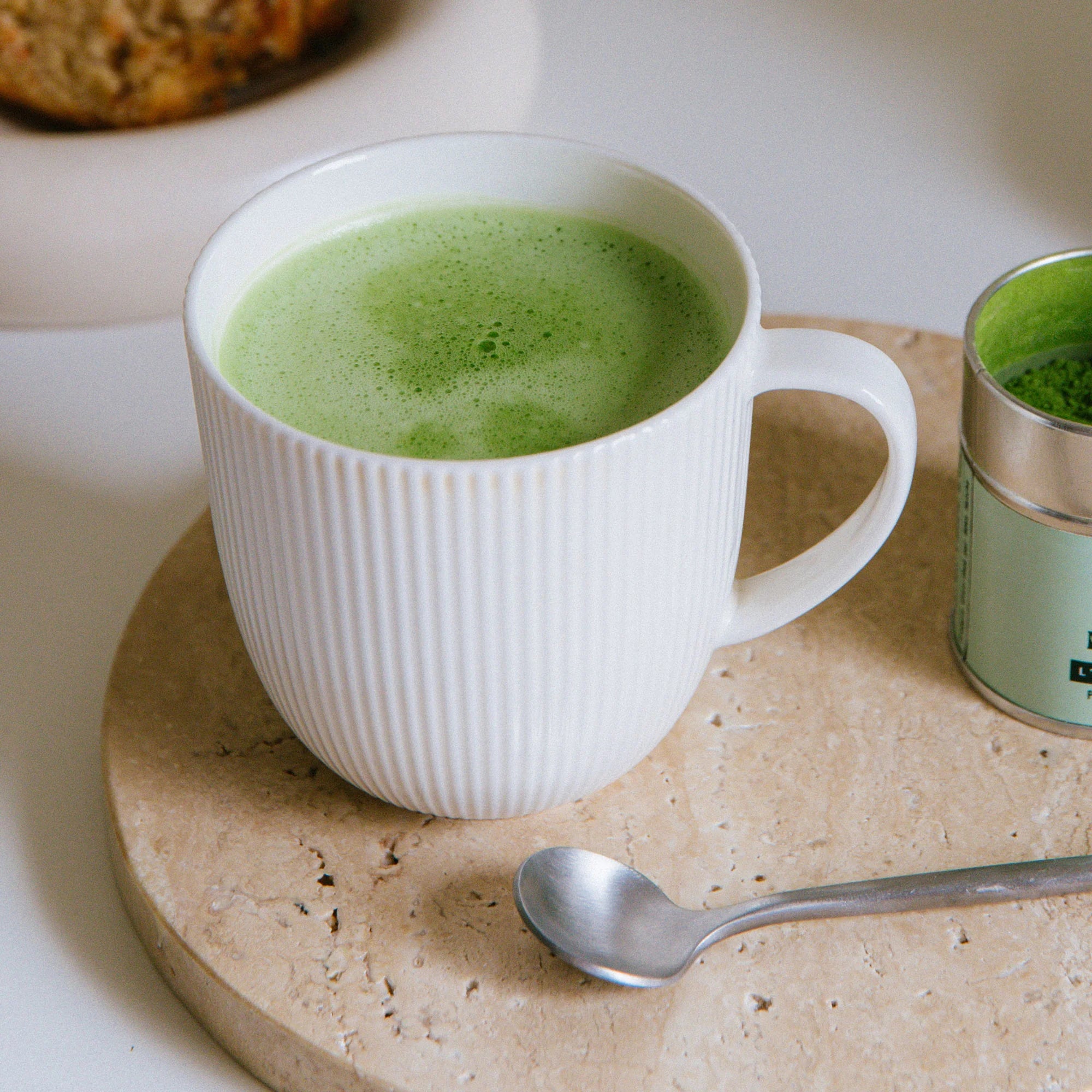
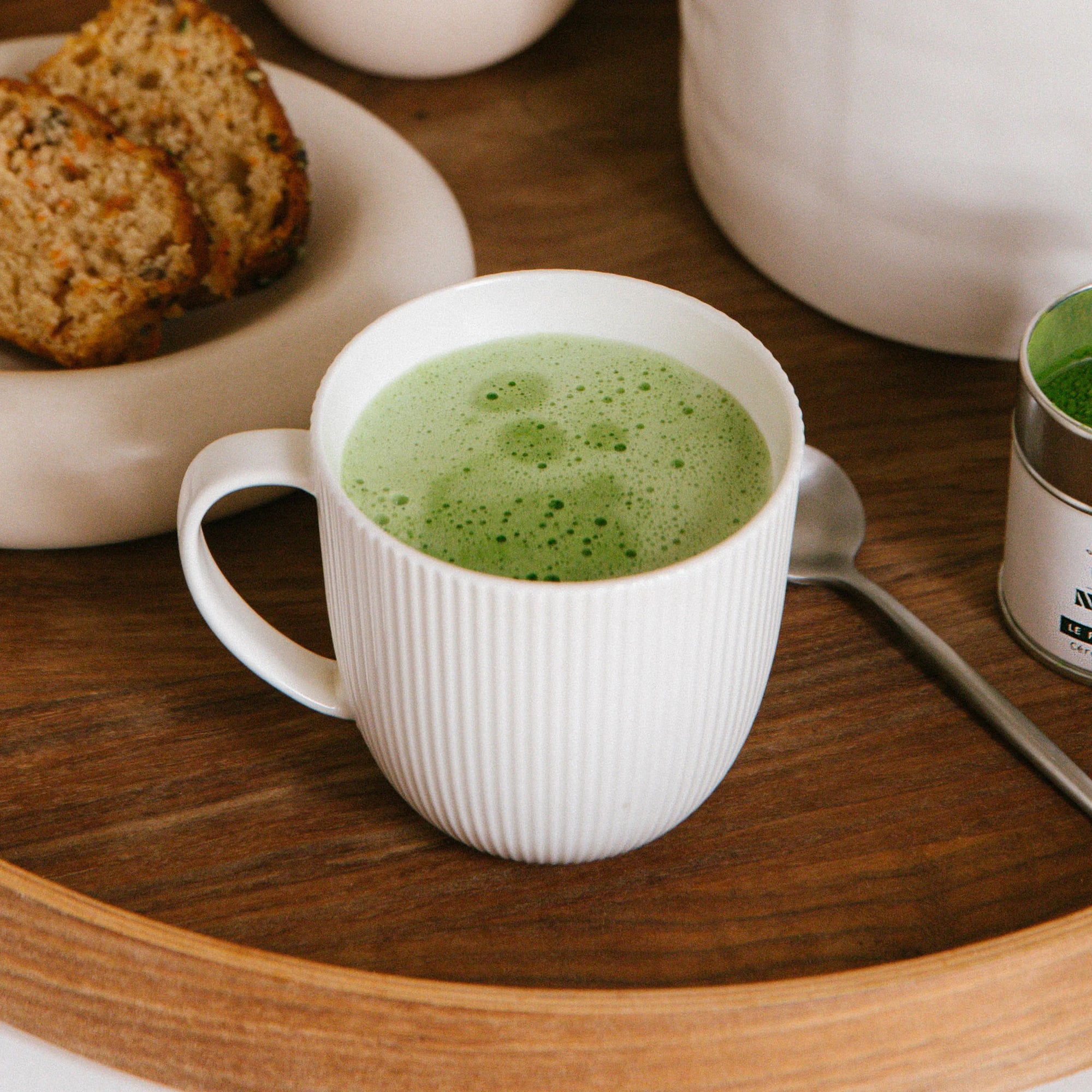
The preparation stays simple: the matcha is first whisked with a little hot water to form a concentrated, lump-free paste, then hot milk is added (dairy or plant-based: oat, almond, soy). The result is softer and rounder on the palate than usucha, since milk naturally softens the tea's bitterness and astringency.
The iced latte
Popularized on social media in recent years, the iced matcha latte follows the same principle: matcha paste diluted in a little water, then poured over ice with cold milk. Today it comes in many variations: plain, vanilla, strawberry, or layered banana, or even as a "dirty matcha," which pairs matcha with a shot of espresso for a caffeine-and-theine combo.
Smoothies and mixed drinks
Matcha also works very well in smoothies: blended with plant-based milk, a banana, spinach, or other fruit, it brings its color and grassy flavor without overpowering the other ingredients. It's a good option for people who find usucha too intense, while still keeping a fairly plain consumption (without necessarily adding sugar).
Water at 70°C max, so as not to "burn" the matcha?
It's a widespread idea: above 70°C (158°F), the water supposedly "burns" the matcha and destroys its benefits. This idea deserves some nuance, because it mixes up two different things.
With a classic steeped tea, the leaves are filtered out after extraction: water temperature therefore directly affects how many catechins and other compounds actually make it into the cup, with the rest staying trapped in the discarded leaf. Matcha works differently: you drink the whole leaf powder, with nothing filtered out. The catechins, theanine, and chlorophyll it contains all end up entirely in your cup, regardless of the water temperature used.
What temperature really changes is taste and color. Water close to boiling noticeably increases bitterness and astringency, and can dull the green color: chlorophyll degrades under too much heat, a phenomenon well documented in food science. This is why we recommend water around 70°C (158°F) for our matchas — for a rounder taste and a nicer color, not to "preserve the benefits," and not because nutrients would otherwise be lost.
A small historical nuance: in the traditional Japanese tea ceremony, usucha is prepared with hotter water, around 90°C (194°F) (see the table above). Vigorous whisking with the chasen is precisely what softens that astringency through foam, rather than limiting it by lowering the temperature. Both approaches are legitimate, one relying on technique, the other on gentler water.
And in cooking or baking?
Matcha isn't limited to the cup. In cooking, it's used in baked goods (cakes, cookies, mousses), ice cream, porridge, or smoothie bowls, where it brings its characteristic color and grassy flavor. For these uses, a so-called "culinary" matcha is generally preferred, made from later harvests than ceremonial-grade matcha: its more pronounced, sometimes more bitter flavor holds up well against other ingredients (sugar, chocolate, milk), whereas a more delicate ceremonial matcha would lose its subtlety once mixed in. This is exactly the role Le Pâtissier plays in our range.
Does milk really kill matcha's benefits?
It's the question we get asked the most, and the honest answer is more nuanced than a simple yes or no.
A scientific review published in 2023 in the journal Molecules (Najman, Sadowska, Wolińska, Starczewska, and Buczak) sums up the current state of knowledge this way: the literature contains conflicting data on the effect of milk on tea's antioxidant activity. Matcha's catechins can interact with caseins (milk proteins), which can reduce the antioxidant activity measured in the lab on the resulting drink. Milk fats can also interact with the catechins.
But this same review highlights an essential, often overlooked point: there is very little data on milk's actual effect on what your body really absorbs (bioavailability), particularly for caffeine. In other words, a test-tube measurement showing a drop in antioxidant activity doesn't, on its own, prove that your body gets less benefit from matcha once the drink is consumed. This is an important nuance, and the literature still lacks solid data to settle the question definitively.
What we do know for certain, however, is that milk genuinely softens matcha's taste, tempering the natural bitterness and astringency of catechins and tannins, while adding its own nutritional qualities (protein, calcium). So it's neither a problem nor a miracle fix: it's a preparation choice, with its own flavor trade-offs.
Our view, plainly stated: the plain shot remains the most direct way to enjoy matcha as it is. The latte remains a genuine way to drink it every day, not a watered-down version. Both are legitimate, and the best choice is the one you actually feel like drinking every day.
Which Noka matcha for which format?
Our 4 matchas aren't all suited to exactly the same uses:
FAQ
In summary
There isn't just one right way to drink matcha. Usucha (the real name for the "shot") remains the most traditional and direct preparation. Koicha, thicker and more concentrated, remains reserved for high-end matchas. The latte, hot or iced, softens the taste thanks to milk, without it being possible to say for certain that it reduces what your body actually absorbs: science still lacks clear data on this specific point. Smoothies and cooking open up a third path, just as legitimate. The best format remains whichever one you choose to drink, every day.
Any questions about preparing your matcha? Contact us, we'll be happy to answer.