Heavy Metals in Matcha: What Our Lab Tests (Really) Reveal
For the past few weeks, it's been hard to miss an article or a story mentioning the presence of heavy metals in matcha. Cadmium, lead, arsenic... these technical terms are circulating, and many matcha drinkers are now wondering whether their daily cup is doing them more harm than good.
Here's what you need to know, backed by figures rather than impressions.
Heavy metals come from the soil, not from processing
Lead, cadmium, arsenic and mercury are not additives or processing residues: they are elements naturally present in soil. Any plant grown in open ground absorbs a small amount through its roots — tea, but also leafy vegetables, grains, cocoa, or coffee.
In practice, a matcha with zero heavy metals doesn't exist, from any brand. So the real question isn't whether they're present, but their level — and whether that level can be measured precisely.
Why matcha calls for particular vigilance
Matcha has a unique characteristic: it isn't steeped, you drink the whole leaf ground into powder. So whatever the leaf absorbed while growing ends up entirely in your cup — whereas with a classic steeped tea, much of it stays in the leaves that get thrown away.
That's precisely why a lab analysis carries more weight than a logo on a package: it measures what the finished product actually contains, not what's assumed.
Our lab results, matcha by matcha
We harvest our matcha in Japan and offer 4 products, 2 of which are certified organic. In light of the controversy, we had our entire range tested by Eurofins Lanagram, an independent laboratory accredited by COFRAC (tests 1-1488). Samples were taken on June 29, 2026.
We're sharing the detailed results here — and the full reports are available for download, not just a summary: each report lists, molecule by molecule, every pesticide tested for and its quantification threshold.
What this actually means in your cup
A table in mg/kg stays abstract. What really matters is the dose actually consumed — and matcha is drunk in small amounts: around 2 g of powder per bowl (see the "Dose per bowl" tab above, which also includes a comparison point with dark chocolate).
(µg = microgram, i.e. one-thousandth of a milligram.)
These per-bowl amounts remain, in absolute terms, very low — but we'd rather let you look at them than comment on them for you. That's also why we make the full reports available: it's up to you to review them, compare them, and form your own opinion.
Organic, pesticides, and glyphosate: what to distinguish
The European organic label prohibits synthetic pesticides and herbicides, including glyphosate. A product containing glyphosate residues, regardless of the amount, cannot be certified organic — this is a regulatory framework, not a marketing claim.
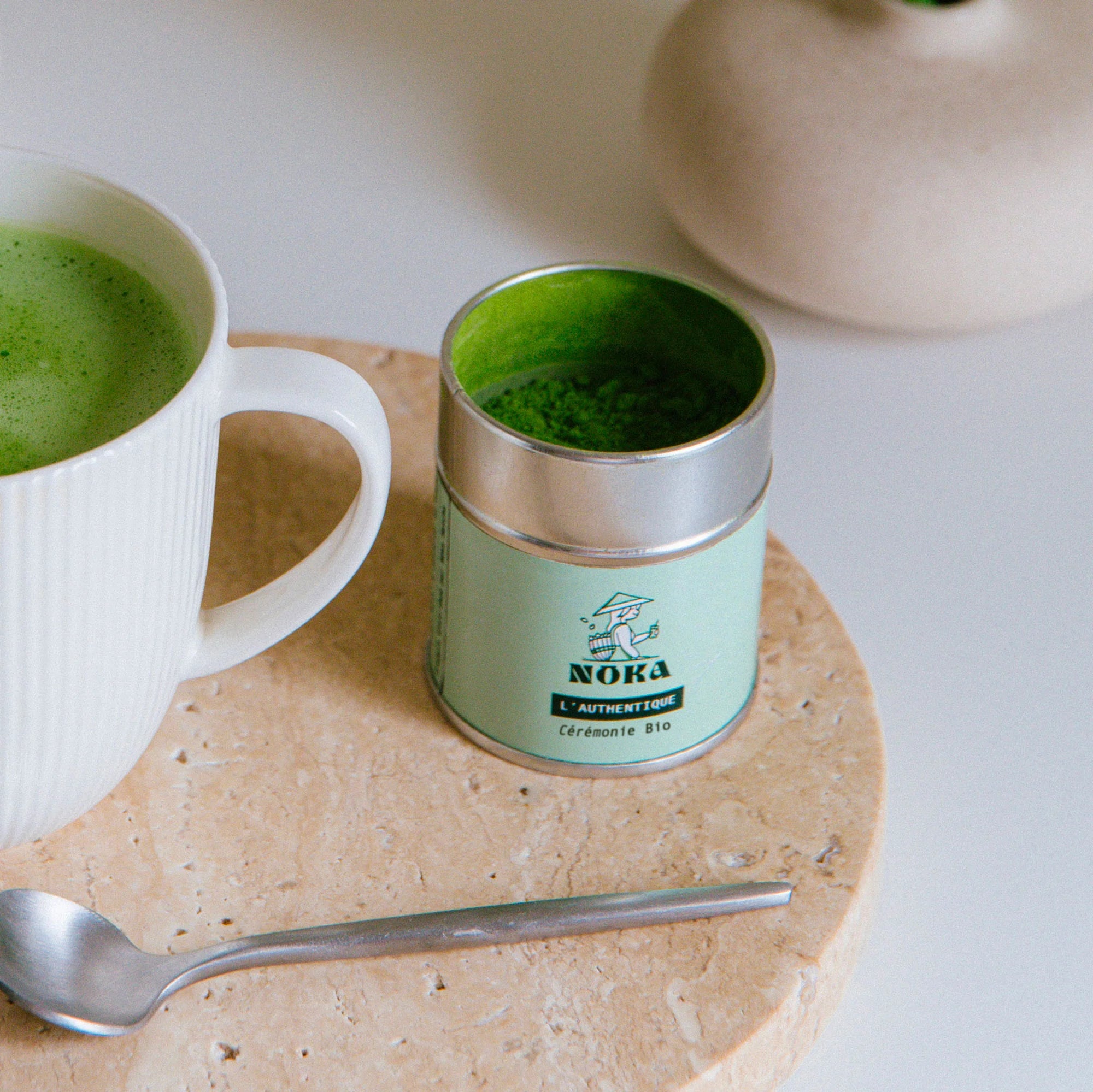
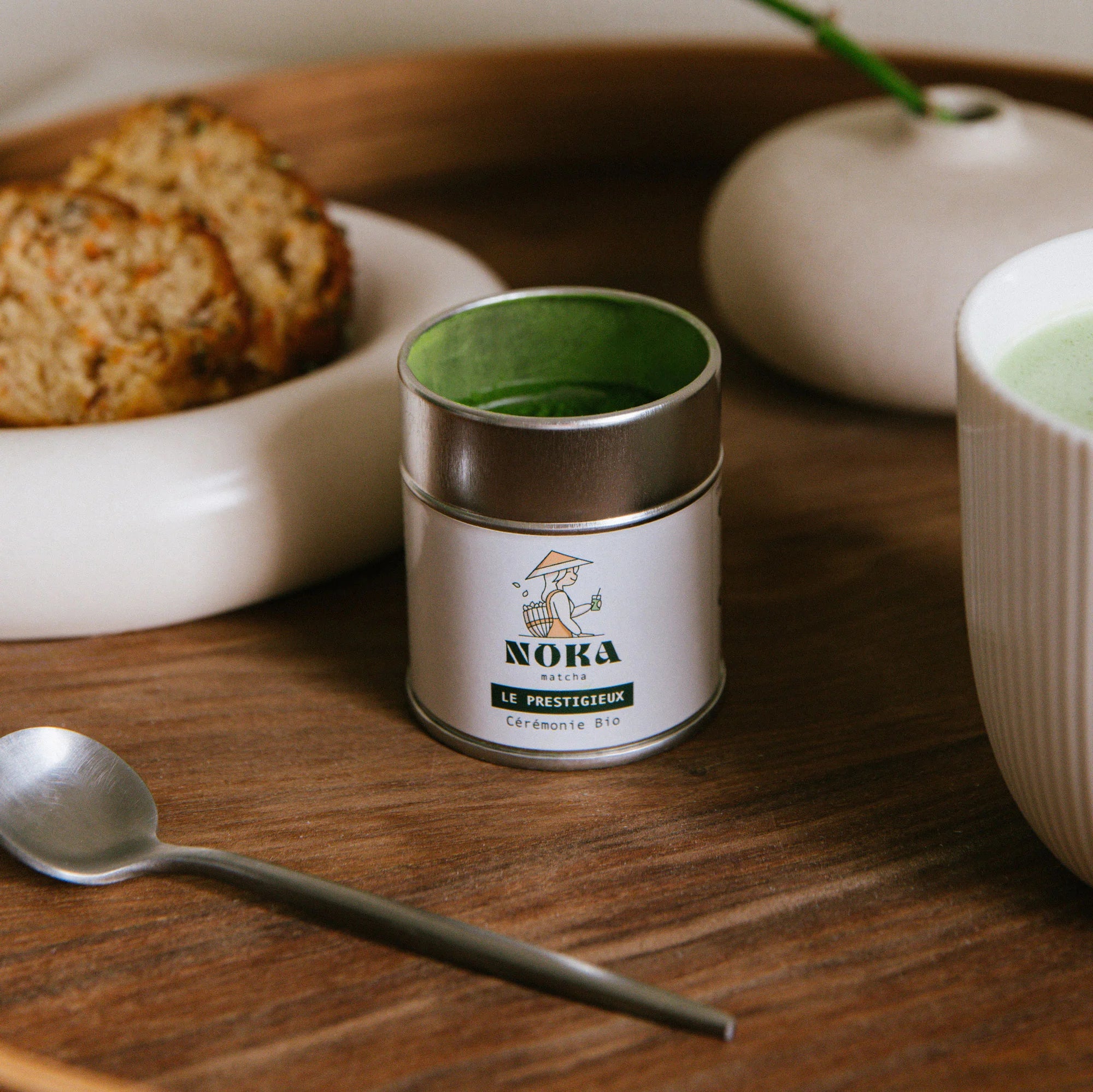
Le Prestigieux and L'Authentique comply with Regulation (EU) 2021/1165: no pesticide not authorized in organic farming was detected, including glyphosate — the result stayed below the quantification limit (0.01 mg/kg) for both products.
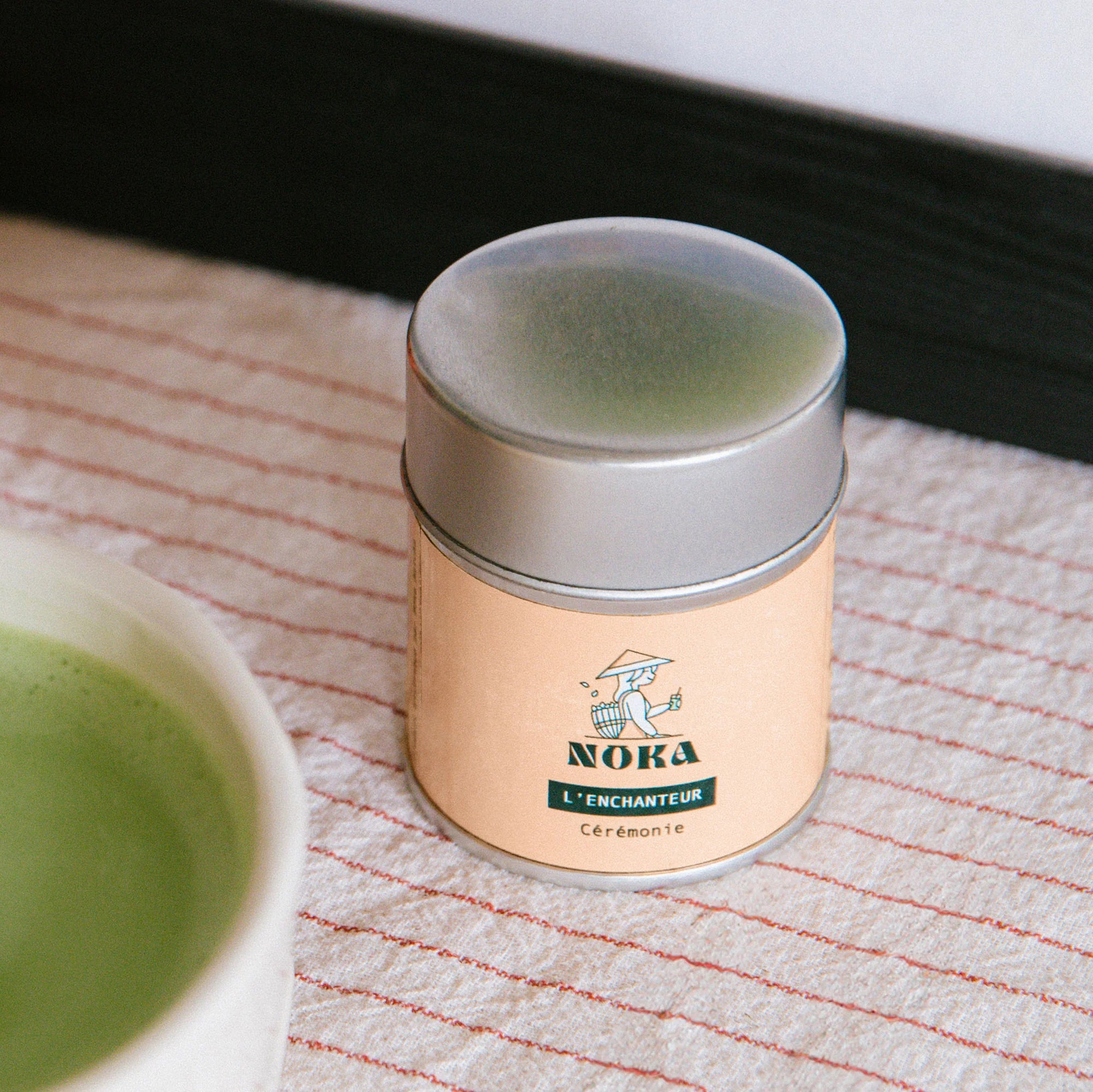
But organic isn't the only path to a clean result: L'Enchanteur, which isn't certified organic, also shows zero detected pesticide residue, including glyphosate. Organic certification remains a strong, verifiable regulatory guarantee — but the best way to know what a product actually contains is still to look at the analysis itself, organic or not.
How to check the reliability of any matcha, whatever the brand
A few simple questions to ask before buying:
- Does the brand publish the full lab report, or just a summary / infographic?
- Is the analysis recent and updated regularly (ideally with every harvest)?
- Is the laboratory independent and accredited (COFRAC, ISO/IEC 17025...)?
- Does the brand clearly distinguish between organic and "pesticide-free"? These are related but different pieces of information.
If the answers stay vague, that's often telling.
FAQ
In summary
All 4 of our matchas were tested by an accredited independent laboratory. On heavy metals, all results are considered compliant with the applicable reference values. On pesticides, three products (including both of our organic ones) show no detection at all, including glyphosate; the fourth (Le Pâtissier) shows two traces very far below regulatory thresholds, with no trace of glyphosate. We will continue to have our range tested regularly and to publish the full reports — in our view, that's the only real answer to this kind of controversy.
Any questions about our analyses? Contact us, we'll be happy to answer.