Organic Matcha: Why This Certification Matters (and What It Really Guarantees)
Organic has become an almost automatic reference point when choosing a matcha. But concretely, what does this label actually guarantee on a product imported from Japan? What's its real impact in your cup? And above all, how can you verify it beyond simply trusting a logo? Here's what you need to know, with precise rules rather than impressions.
Organic: a legal framework, not a marketing claim
"Organic" isn't a claim any brand can freely attach to itself. In Europe, the designation is protected by Regulation (EU) 2018/848, which governs organic production and its labeling. To carry this label, a product must meet precise rules, verified by an independent certification body — never by the brand alone.
A tea grown in Japan and sold as organic on the European market must meet these same requirements, whether it is certified directly under this framework or imported under an equivalence arrangement recognized by the European Union. In both cases, an independent inspection validates every step, from the plot of land to the finished product.
And for matcha, this vigilance matters even more than elsewhere. It isn't steeped: you drink the whole leaf ground into powder. Everything the plant absorbed while growing ends up entirely in your cup, whereas with a classic steeped tea, much of it stays in the leaves you throw away. This is precisely why the growing method, organic or not, has a more direct impact on what you consume.
What the organic label actually guarantees
In practice, organic farming bans a set of practices at the source, during cultivation:
- Synthetic pesticides and herbicides, including glyphosate.
- Synthetic chemical fertilizers.
- Genetically modified organisms (GMOs).
On top of this come traceability requirements and an independent audit, usually annual, covering farming practices as much as paperwork. It's a production method governed by law, not just a claim on a package.
Organic and pesticide residues: two different guarantees
Organic certification covers the growing method. Lab analysis covers the finished product. The two complement each other, but they don't answer exactly the same question.
Organic regulations are strict on this specific point: a product containing glyphosate residues, regardless of the amount detected, cannot be certified organic. This is a regulatory framework, not a marketing claim. But a clean lab result can also be measured independently of the label: that's exactly what a detailed, molecule-by-molecule lab report allows.
Le Prestigieux and L'Authentique, our two certified organic matchas
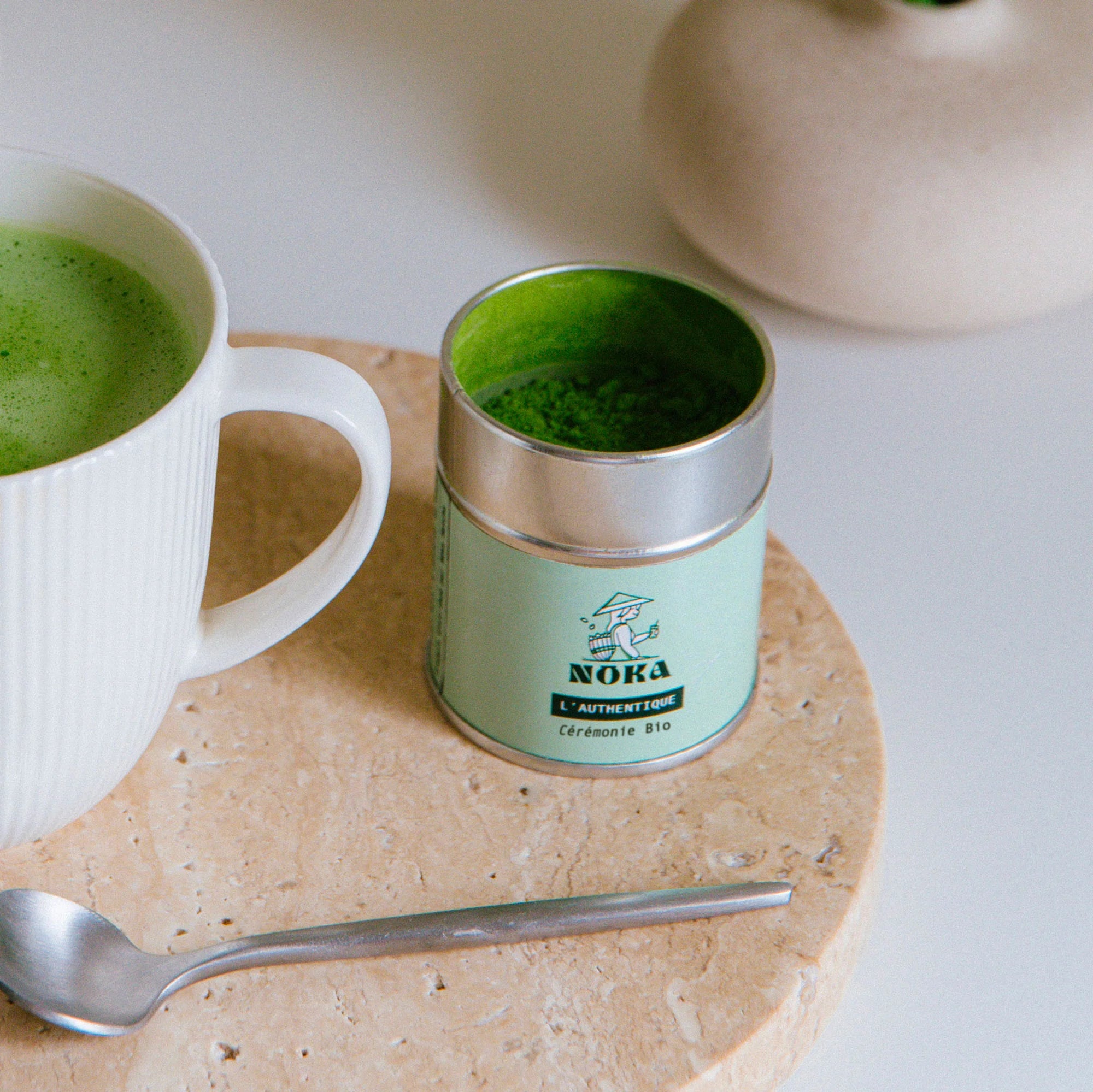
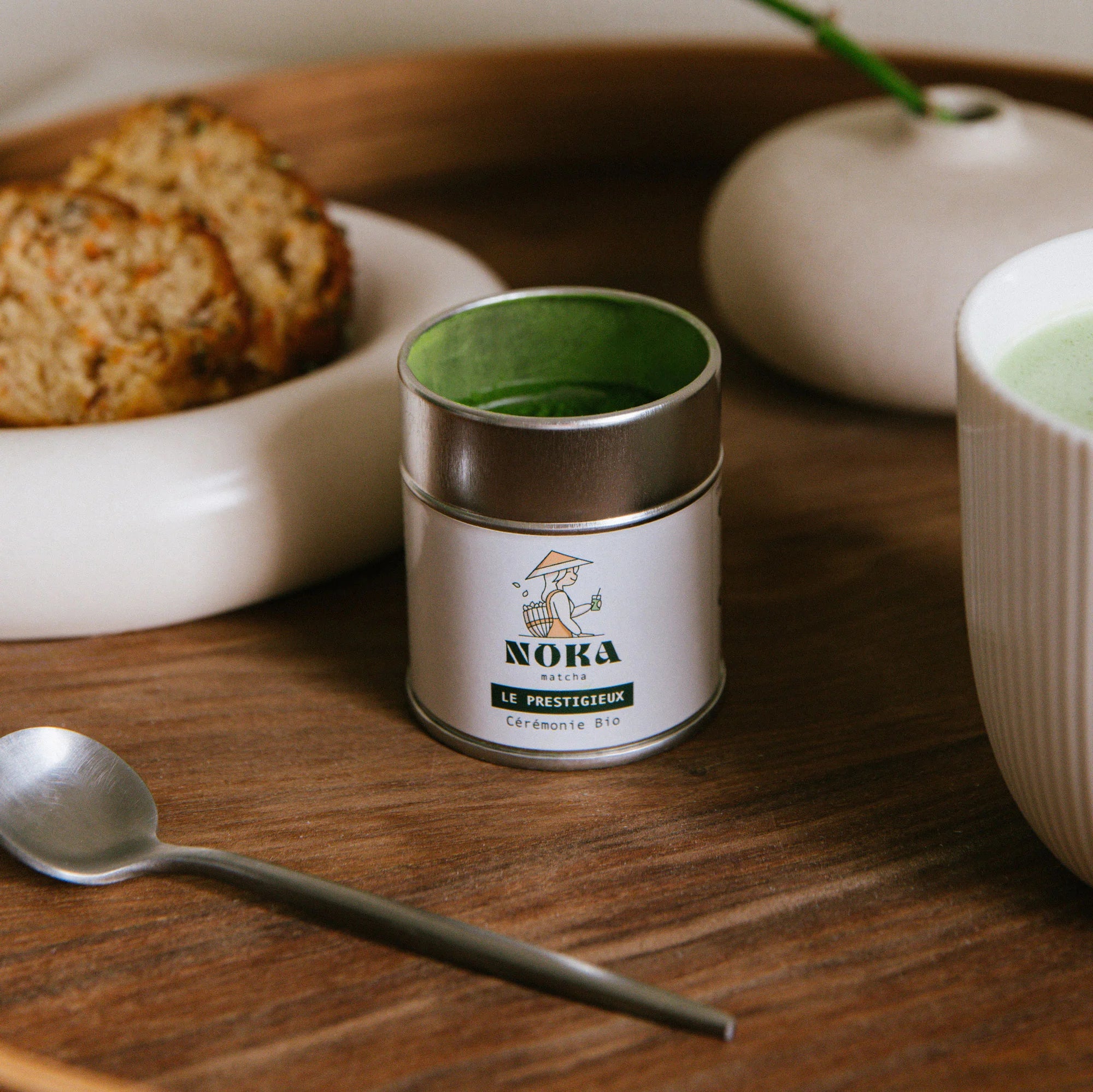
At Nōka, two products in our ceremonial range are certified organic: Le Prestigieux, harvested in Kagoshima from the cultivars Okumidori and Saemidori, and L'Authentique, also grown in Kagoshima, a blend of Okumidori and Yabukita. Both are grown under organic farming, far from any yield-at-all-costs approach, and certified under the criteria we just outlined.
So what about our own results?
We had our entire range tested by an accredited independent laboratory, and broke down each result, molecule by molecule, in a dedicated article: Heavy metals in matcha, what our lab analyses (really) reveal. You'll also find each result directly on every product page, in the "Our lab analyses" section, along with the full lab report available for download.
How to recognize a real organic matcha, not just a label
A few simple pointers before you buy:
- Check that the organic logo is accompanied by the certification body's number.
- Check whether the brand publishes a full lab report, not just a summary or infographic.
- Check that the analysis is recent, ideally renewed with every harvest.
- Check that the laboratory is independent and accredited (COFRAC, ISO/IEC 17025...).
- A single isolated figure, a screenshot, or an excerpt proves nothing: a real report lists every molecule tested for, including unfavorable ones, not just the ones that are reassuring.
If the answers stay vague, that's often telling. A brand can easily talk up its organic status without ever showing a full report: in that case, a fragment of an analysis is no better than no analysis at all.
In summary
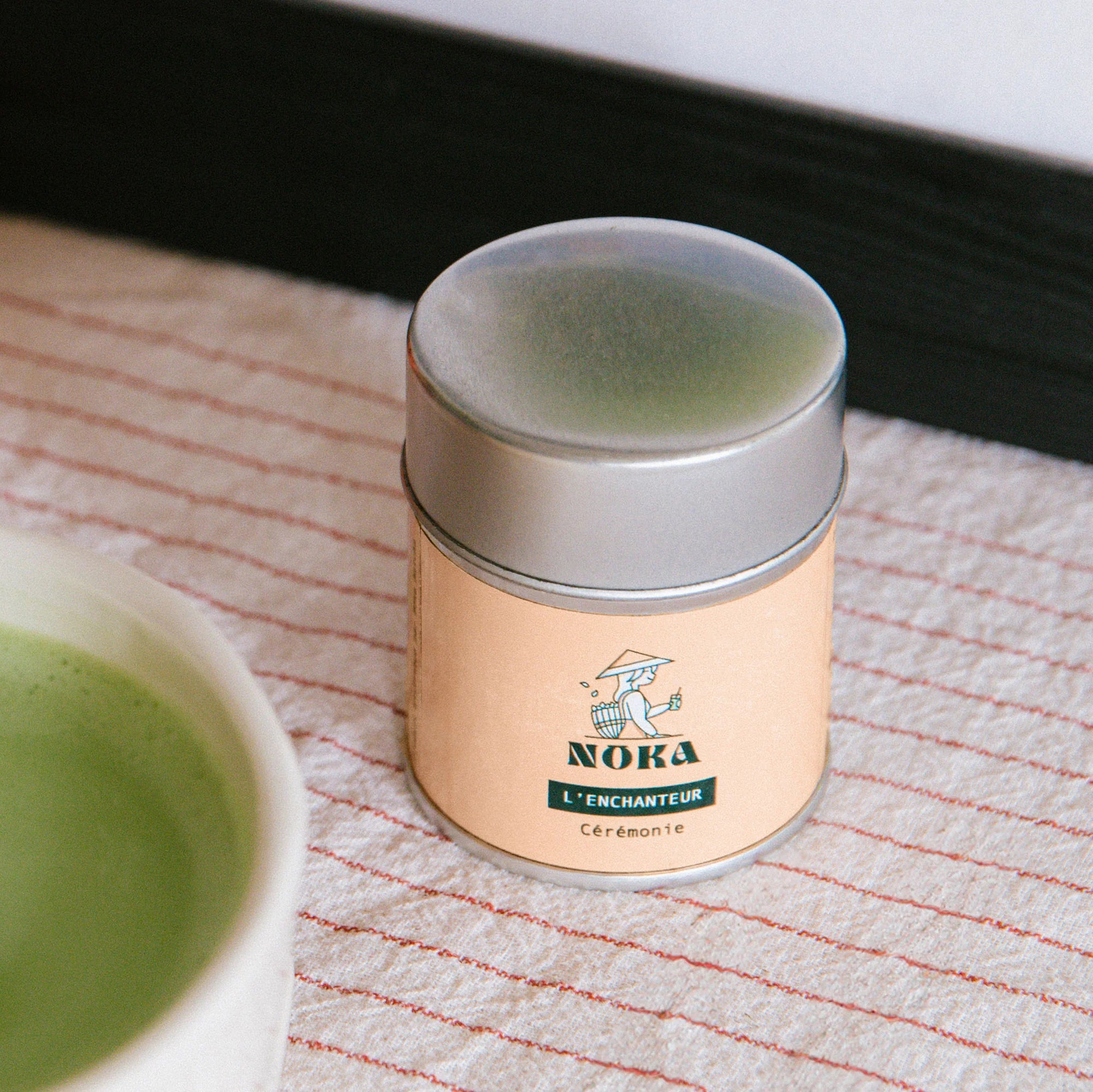
Organic is a precise legal framework, checked by an independent body, that bans synthetic pesticides and fertilizers as well as GMOs right from cultivation — and that matters even more for matcha since you consume the whole leaf. Two of our ceremonial matchas, Le Prestigieux and L'Authentique, are certified under these rules. We go further by having our entire range tested, including L'Enchanteur, which isn't organic: the results are public, detailed in our article on heavy metals and pesticides, and available on every product page.
Any questions about our certifications or our lab analyses? Feel free to contact us, we'll be happy to answer.