7 Beginner Mistakes to Avoid with Matcha
Matcha has a reputation for being tricky to prepare, when really it's mostly a matter of a few habits to pick up. Most beginners make the same small mistakes, almost always the same ones, often without even realizing it, before eventually concluding that matcha just isn't for them. Here are the seven most common mistakes, and more importantly, how to fix them easily.
Water that's far too hot
This is probably the most widespread mistake: pouring water straight off the boil, over 100°C (212°F), directly onto the powder. Matcha prefers gentler water, around 70-80°C (158-176°F). At that temperature, it reveals its lightly sweet side and its umami, whereas above 90°C (194°F), the compounds responsible for bitterness take over and overwhelm everything else. If you don't have a temperature-controlled kettle, simply let freshly boiled water sit for a minute or two before pouring.
A bargain matcha, with quality to match
To get a first taste, many beginners naturally reach for the cheapest matcha they can find in store or online. The problem is that a matcha's price largely reflects its real quality, the harvest, how finely it's ground, the absence of bitterness, and a matcha that's too cheap often gives a dull, harsh result, a bad first impression that puts people off before they've even had the chance to appreciate what matcha can really offer. Our article on the signs of a poor-quality matcha breaks down exactly what sets a good powder apart from a disappointing one, well before the first sip.
Not enough powder
At first, people often go light on the powder, partly out of fear of using too much or wasting it. The result is a matcha that's too diluted, with no body, which makes it seem like matcha tastes bad when it's really just underdosed. A good starting point is between 2 and 3g of powder per bowl, depending on the type of matcha and the intensity you're after, roughly a level to heaping teaspoon if you don't have a small scale. Our full preparation guide breaks down the dosage for every format, from a shot to a latte.
Forgetting to sift the matcha
Matcha is an extremely fine powder, which is exactly what makes it sensitive to humidity and static: it easily forms small, compact clumps at the bottom of the bag, invisible to the naked eye, that won't fully dissolve even with vigorous whisking. A quick pass through a fine sieve or a small tea strainer, directly over the bowl, before adding the water, is usually enough to avoid most lumps, especially with a matcha that isn't ground very finely.
At Noka, this step is generally unnecessary: our matchas are ground extremely finely, specifically to avoid this kind of issue, and dissolve lump-free from the very first whisk. It's actually a good quality marker to know, whatever the brand, the more finely a powder is ground, the less it needs sifting.
Using a dry chasen
The chasen, the traditional bamboo whisk, shouldn't be used straight out of its packaging or storage. Before whisking, it's best to soak its tines in warm, not boiling, water for one to two minutes. This step softens the fine bamboo tines, keeps them from snapping on the first flick of the wrist, removes any lingering storage smell, and helps the chasen spring back into its rounded shape so it whisks effectively. A full article dedicated to proper chasen technique, from A to Z, is coming soon on this blog.
Skipping the whisking step before adding milk
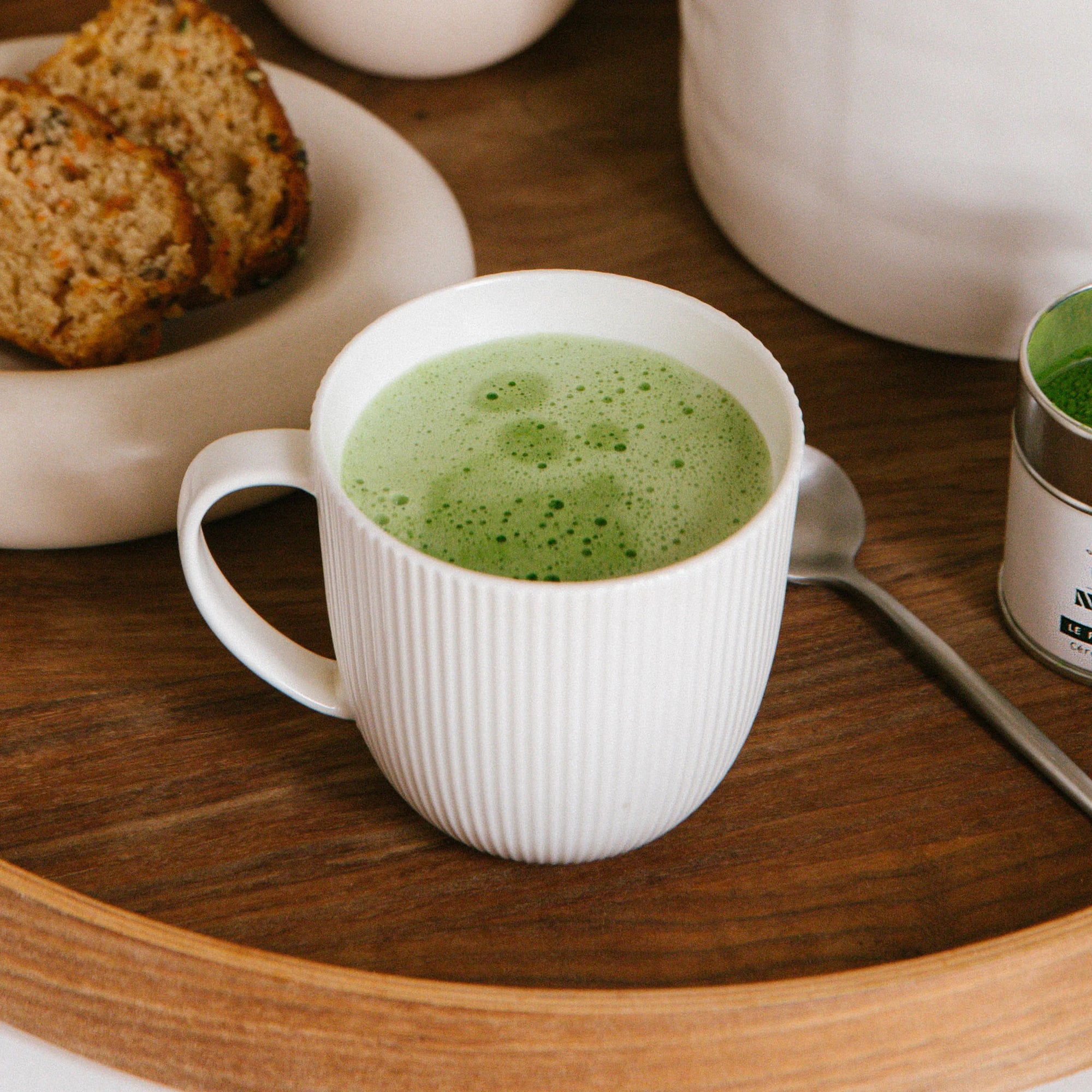
This is a very common mistake among people mainly making matcha lattes: pouring the powder straight into the milk, hot or cold, then stirring with a spoon and hoping everything dissolves. The near-guaranteed result is dry clumps floating to the surface and an unpleasant, grainy texture. The right method is to whisk the matcha first with a little hot water, to properly emulsify it into a smooth paste, before topping it up with the milk of your choice. This step is also what gives matcha its lovely fine froth, one of the signs of a good, present umami.
Waiting too long before drinking it
A freshly prepared matcha has nothing in common with the same matcha forgotten for twenty minutes on a desk or kitchen counter. The powder oxidizes quickly once it's in contact with water or milk, the color turns dull, the froth settles and some of the flavor fades. Matcha is meant to be prepared to be drunk right away, not made ahead of time like a coffee you let cool and come back to later.
In summary
None of these mistakes are unfixable, and most beginners actually make several of them at once without realizing it. Water between 70-80°C (158-176°F), a matcha whose origin you know, a dose of 2 to 3g, a quick sift, a chasen soaked before use, a real whisking step before the milk, and a matcha drunk right away rather than later, that's all it takes to turn a disappointing first try into a habit you look forward to every day.
Have a question about preparing your matcha? Feel free to reach out, we'd be happy to help.