Sencha and Gyokuro: An Explanation of Other Japanese Green Teas
You already know tencha, the leaf that becomes matcha once ground. Sencha and gyokuro are a different story: two Japanese green teas brewed as loose leaves rather than drunk as powder, one very common and the other rather rare and prestigious. Three ways of growing and preparing the same plant, for three very different results.
Sencha, Japan's everyday green tea
Sencha accounts for the vast majority of green tea consumed in Japan, far ahead of matcha or gyokuro. It's the everyday tea, the one served at the office, at home with family, or to a guest without any particular ceremony. Unlike tencha, whose tea plants are shaded for several weeks before harvest, sencha is grown in full sun, with no protection from light at all.
This exposure changes everything in the final result: without shading, the leaf produces less theanine and more catechins, giving a more vegetal, sometimes slightly astringent taste, with much less umami roundness than a tencha or a matcha. We detail what theanine brings to the taste in our article on umami.
A production process with nothing in common with tencha
The sencha harvest first follows a path similar to tencha's: the leaves are steamed very quickly after picking, to stop oxidation, exactly as we explain in our article on tencha. But from there the paths diverge completely: where tencha is dried flat, without being rolled, to remain a whole leaf destined for grinding, sencha is rolled into small green needles during drying. This rolling is what gives sencha its characteristic shape, and it allows the leaf to open up properly once steeped in hot water.
This difference isn't a minor technical detail: it explains why sencha is brewed like a classic tea, whereas matcha is drunk as powder, whole leaf included.
Why the same cultivar can produce a sencha or a matcha
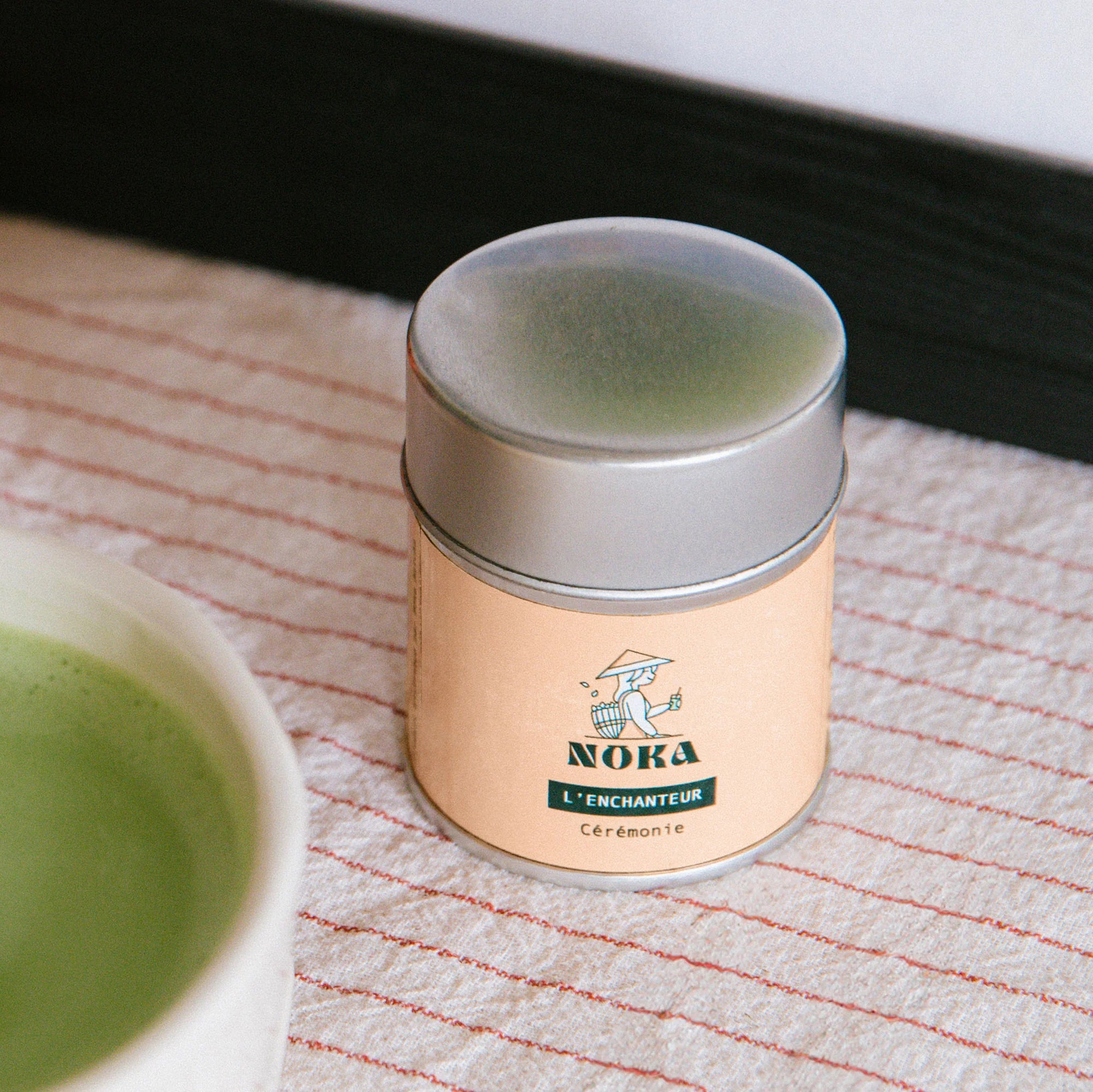
Cultivar refers to the tea plant's variety, its genetic makeup. It isn't the cultivar that decides whether a leaf will become a sencha, a gyokuro, or a matcha, but rather the way it's grown and processed afterward, in the shade or in full sun, rolled or dried flat. The Yabukita cultivar is a good example: on its own it accounts for more than two thirds of the planted area in Japan, making it the reference cultivar for sencha, simply because sencha is the most widely produced tea in the country. But nothing stops you from growing that same Yabukita in the shade to turn it into a tencha, and then a matcha, as is the case for two of our matchas, l'Enchanteur and le PÃĒtissier. We cover each cultivar and its influence on taste in detail in our article on origin and cultivar.
Gyokuro, Japan's most prestigious green tea
Gyokuro holds a place of its own, between sencha and tencha. Like tencha, its tea plants are shaded before harvest, generally for around twenty days, a bit less time but with the same goal: pushing the plant to produce more theanine and fewer bitter catechins. Like sencha, however, the gyokuro leaf is then rolled and dried, to be brewed as loose leaves rather than ground into powder.
The result is a very smooth, almost sweet tea, with a pronounced umami roundness and very little bitterness, precisely thanks to that shading. This demanding cultivation, combined with a harvest and processing that are often more artisanal, explains why gyokuro remains one of Japan's most expensive green teas, well beyond common sencha.
Origins more recent than matcha's
Matcha and the tea ceremony date back several centuries, carried forward first by Buddhist monks and later by Zen culture. Sencha and gyokuro are much more recent inventions. The modern rolling method used for sencha is traditionally credited to a tea merchant named Nagatani Soen, in the Uji region, in the 18th century, with the goal of making green tea accessible to as many people as possible. Gyokuro is thought to have appeared a bit later, around 1835, credited to another tea merchant from the same region, Kahei Yamamoto, who is said to have applied the idea of shading to this new rolling method to create a brewed tea more refined than common sencha. It's partly thanks to these inventions that green tea became an everyday drink in Japan, rather than a ritual reserved for a select few, as we cover in our article on the tea ceremony and chanoyu.
How to brew a sencha or a gyokuro
Sencha is brewed in water at around 70 degrees, cooler than for a black tea, for one to one and a half minutes. Water that's too hot or a brew that's too long brings out the leaf's bitterness, whereas a well-judged preparation instead reveals its vegetal freshness and light sweetness.
Gyokuro, more delicate, needs even cooler water, around 50 to 60 degrees, for a slightly longer brew, two to three minutes. It's this low temperature that lets its full natural sweetness come through without ever tipping into bitterness.
In summary
Sencha, gyokuro, and matcha come from the same plant, but everything else diverges: growing in the sun or in the shade, rolling or drying flat, brewing as leaves or drinking the whole powder, and more recent, more everyday origins for the first two, against a much older ceremonial tradition for matcha. Gyokuro, in turn, sets itself apart from sencha through its shading, closer in that respect to tencha, while still being brewed as leaves like sencha. Understanding sencha and gyokuro also means better understanding what makes matcha so special.
Have a question about the different Japanese green teas? Feel free to contact us, we'll be happy to answer.